.avif)





%201.svg)


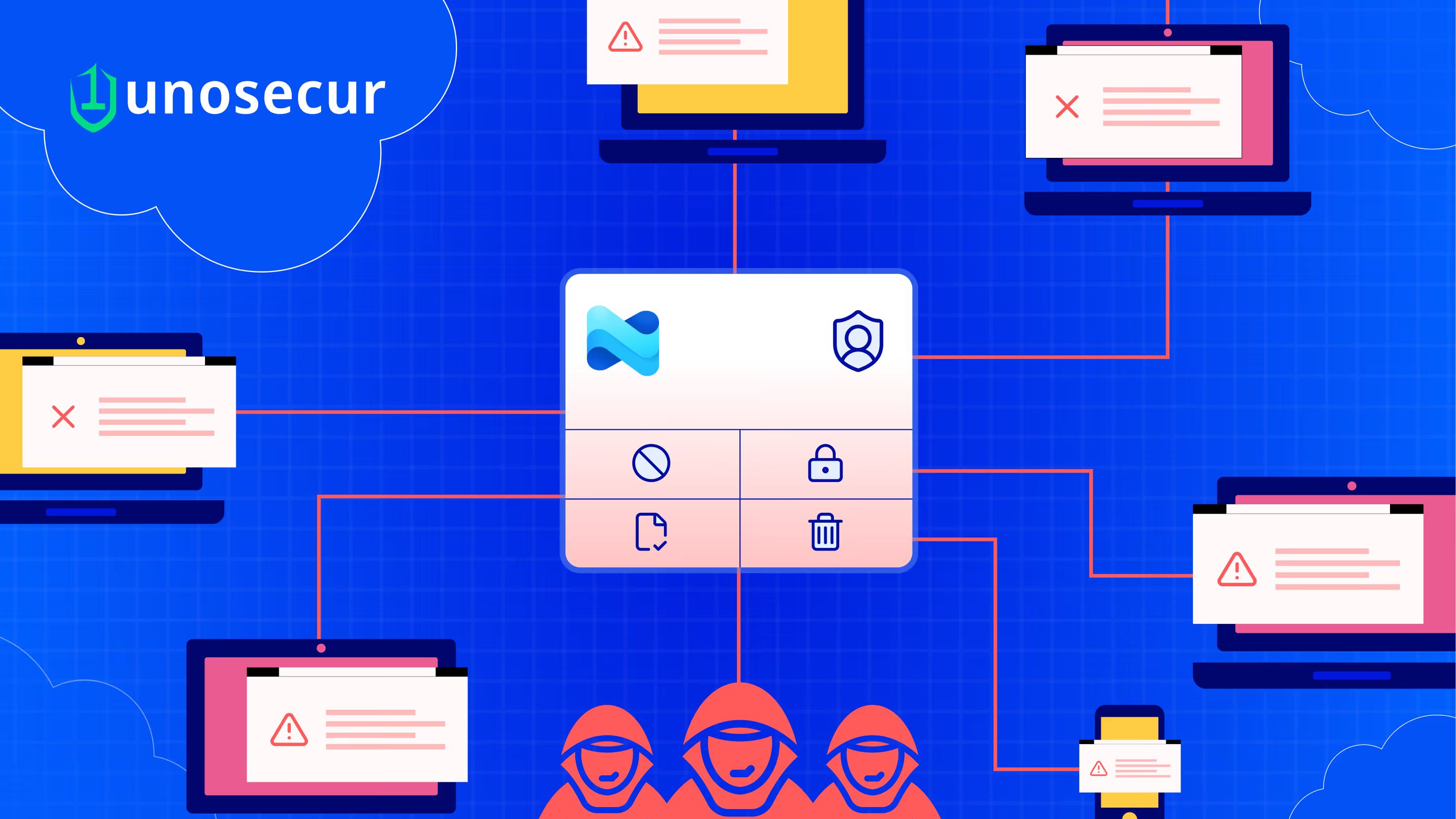
Geopolitical conflict increasingly intersects with corporate infrastructure. The Stryker cyberattack is a sharp reminder. In March 2026, medical technology giant Stryker Corporation experienced a cyberattack that disrupted its global Microsoft environment and internal systems. The company confirmed the breach caused a widespread network disruption affecting internal services used for manufacturing, logistics, and order processing. Handala later claimed the attack. The hacking group is widely assessed by researchers as linked to Iranian state-aligned cyber operations. Stryker reported no evidence of traditional malware in its systems. Early threat analysis suggests that attackers targeted the organization's Microsoft-based identity and device management infrastructure. That compromise disrupted access to thousands of corporate systems worldwide.
This incident highlights a rapidly growing category of cyberattacks: identity-driven operations that weaponize legitimate enterprise tools. Rather than breaching networks through malware or exploiting vulnerable endpoints, attackers increasingly target administrative identities and management control planes. Once those identities are compromised, attackers can leverage legitimate enterprise platforms to execute disruptive actions across an organization's entire environment.
The Stryker attack provides a powerful case study of how modern cyber operations are evolving.
The "Lethal Trifecta" behind modern identity attacks
Modern enterprise attacks increasingly rely on three powerful elements working together: Compromised privileged identities Trusted enterprise management platforms Destructive or disruptive administrative actions. Security researchers describe this convergence as a "lethal trifecta." Attackers cause widespread operational disruption without deploying traditional malware. The Stryker incident illustrates how these elements can converge inside modern enterprise identity infrastructure.
1. Enterprise management tools as attack vectors
One of the most striking aspects of the Stryker incident is the absence of traditional malware. Investigators believe the attackers targeted administrative access within the company's Microsoft identity and device management environment. They did so without deploying malicious software across endpoints. Platforms such as Microsoft Intune are designed to help IT teams manage devices at scale. Administrators can deploy updates, enforce security policies, manage application access, and remotely wipe lost or compromised devices. However, if attackers gain control of the administrative identities managing these systems, those same capabilities can quickly become destructive.
Reports indicate that employees across Stryker's global workforce were suddenly locked out of their devices as internal systems became inaccessible. In scenarios like this, attackers do not need to deploy malware or compromise endpoints individually. Instead, they issue administrative commands through legitimate infrastructure. This technique is a classic example of living-off-the-land operations. Attackers leverage trusted enterprise tools already present in the environment to avoid detection while maximizing impact.
2. When one healthcare supplier falls, the chain breaks
Stryker is one of the world's largest medical technology companies, employing roughly 56,000 people across more than 60 countries. When the cyberattack disrupted its internal systems, the operational impact quickly spread across the organization's global footprint. The company confirmed disruptions to internal services supporting manufacturing and order fulfillment processes. In Ireland, one of Stryker's largest international hubs, thousands of employees were reportedly sent home after corporate networks became inaccessible.
Despite the disruption, Stryker emphasized that critical medical products used by hospitals remained safe and operational. These products operate independently from the affected corporate environment. However, the incident highlights a broader risk within modern healthcare infrastructure. Large suppliers often serve as critical nodes within global healthcare supply chains. When those organizations experience cyber incidents, disruptions can cascade outward, affecting hospitals, distributors, and medical providers worldwide.
3. Identities, not endpoints, are the real target
The Stryker breach reflects a broader transformation in the cyber threat landscape. Traditional cyberattacks relied heavily on malware and network intrusion techniques. Attackers delivered malicious files through phishing emails or exploited vulnerable systems. They installed backdoors or ransomware, then moved laterally across networks before stealing data or demanding payment. Modern attacks increasingly target identities rather than endpoints. Instead of deploying malware, attackers compromise credentials, authentication sessions, or administrative tokens.
Once access is obtained, they leverage legitimate enterprise systems such as : Identity administration portals device management platforms SaaS administration consoles enterprise identity infrastructure. This approach allows attackers to operate within trusted systems while generating far fewer traditional indicators of compromise. In identity-driven attacks, the blast radius is determined by the privileges of the compromised identity, not the network perimeter.
4. Sabotage over ransom: The rise of destructive operations
Most cyberattacks today remain financially motivated. Ransomware groups typically encrypt corporate systems and demand payment in exchange for restoring access. The Stryker incident appears to represent a different type of operation. Threat analysts believe the attack may have involved destructive administrative actions similar to wiper campaigns. In these scenarios, systems are disabled or data is erased rather than encrypted for ransom. In destructive operations, the objective is not financial gain but operational disruption.
These campaigns are frequently associated with state-aligned cyber activity. The goal is to damage infrastructure, disrupt business operations, or send geopolitical signals. If confirmed, the Stryker attack would represent a notable example of cyber sabotage targeting private industry.
5. Cyber retaliation is now a geopolitical weapon
The group claiming responsibility for the attack framed the incident as retaliation linked to geopolitical tensions. According to public reporting, Handala stated that the operation was connected to a broader geopolitical conflict involving Iran and Western allies. Security researchers warn that this type of targeting reflects an increasingly common pattern. Private companies in strategic sectors are increasingly becoming indirect targets in geopolitical cyber conflicts. Healthcare, manufacturing, and critical supply chains are all exposed.
Organizations may find themselves drawn into international tensions even if they are not directly involved in political or military activity. The Stryker attack demonstrates how cyber operations can escalate into global disruptions affecting private industry.
How Unosecur helps defend against identity-driven attacks
The Stryker incident highlights a critical lesson for modern enterprises. When attackers compromise privileged identities and gain access to centralized management systems, they can weaponize legitimate enterprise tools at scale. This is exactly the type of threat that modern Identity Threat Detection and Response (ITDR) platforms are designed to address.
Unosecur provides an identity-first security platform designed to protect modern identity environments. It helps organizations detect and mitigate identity-driven attacks before they escalate.
Unified Identity Visibility
Modern enterprises operate complex identity environments that include: employees, contractors, service accounts, automation workflows, and third-party integrations
These identities interact with hundreds of enterprise applications and management platforms. Unosecur provides a centralized view of identities, permissions, and relationships across this environment, enabling security teams to understand: which identities have administrative privileges where sensitive systems are exposed how identities interact across enterprise platforms the potential blast radius if a privileged identity were compromised. This visibility helps security teams identify high-risk identity relationships and access paths before attackers exploit them.
Identity Threat Detection
Unosecur continuously monitors identity behavior across the enterprise to detect anomalies that may indicate compromise. Examples include:
Suspicious authentication patterns abnormal privilege usage unusual administrative activity, unexpected access to sensitive systems anomalous identity behavior across enterprise applications Detecting these signals early enables security teams to investigate suspicious activity. It also helps stop attackers before they gain control of critical management systems.
Identity Security Posture Management
Many identity-based breaches succeed because organizations unknowingly maintain excessive privileges or misconfigured identity controls. Unosecur analyzes identity configurations to identify risks such as: over-privileged identities dormant administrative accounts risky OAuth permissions misconfigured access policies unsafe third-party integrations
Reducing these risks significantly lowers the chances that attackers can escalate privileges or move laterally through enterprise identity infrastructure.
Automated Response to Identity Threats
When suspicious identity activity is detected, Unosecur enables automated response workflows that allow security teams to contain threats quickly.
These actions may include: revoking compromised sessions or authentication tokens removing risky privileges enforcing stronger authentication controls isolating suspicious identities triggering investigation workflows for security teams Rapid containment helps prevent attackers from escalating their access or disrupting critical enterprise systems.
The Bigger Lesson
The Stryker cyberattack underscores a fundamental shift in cybersecurity. Attackers no longer need to deploy malware or exploit software vulnerabilities to cause large-scale disruption. Increasingly, they compromise identities and administrative control planes, then abuse trusted enterprise platforms to execute destructive operations. In modern organizations, the most powerful capability inside an enterprise environment is not malicious code. It is a privileged identity operating inside the organization's own infrastructure.
Organizations that invest in identity visibility, privilege governance, and behavioral monitoring hold a decisive advantage. They are positioned to detect and stop cyberattacks before they escalate into major operational disruptions.



.png)
.webp)
%201.svg)




.webp)

.avif)
.webp)