.avif)
Ungoverned digital coworkers
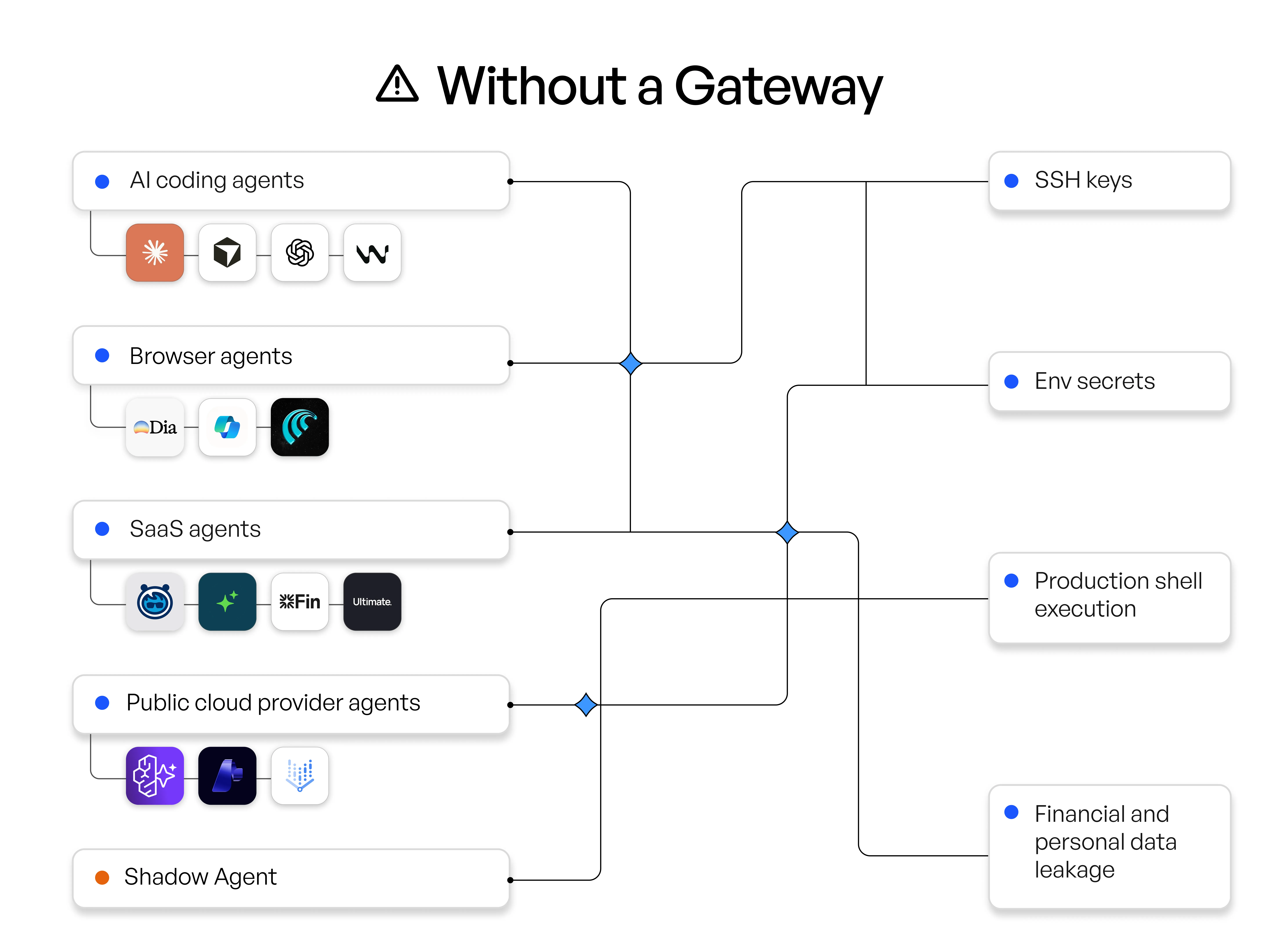
Agentic workspaces like Claude have limited controls, leaving the identity front door open.

.avif)





%201.svg)
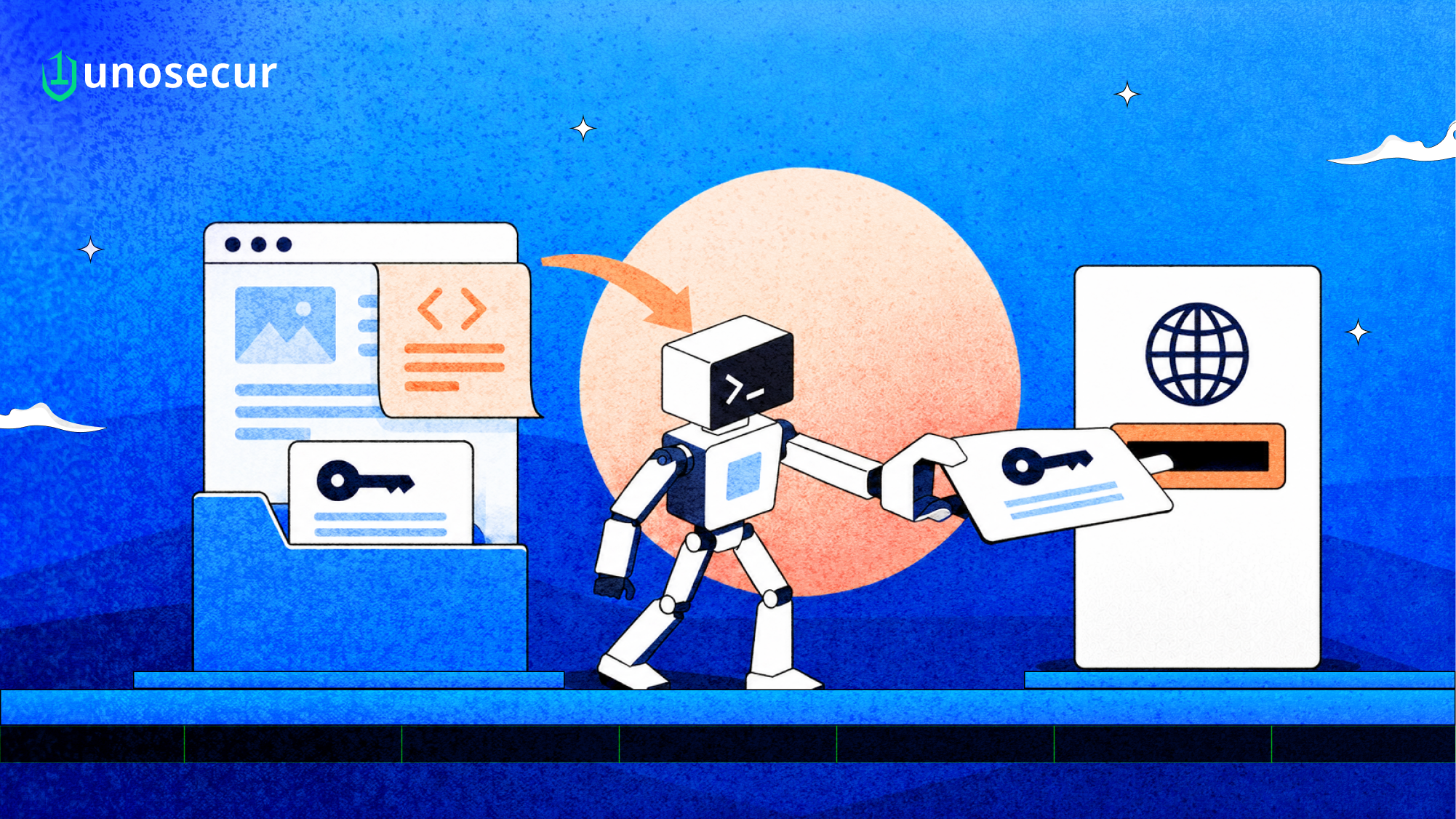
AI agents, agentic workspaces, and agentic IDEs execute operations against live systems through MCP. Unosecur evaluates every action, scopes access for every credential, and logs every decision.

.webp)

.webp)
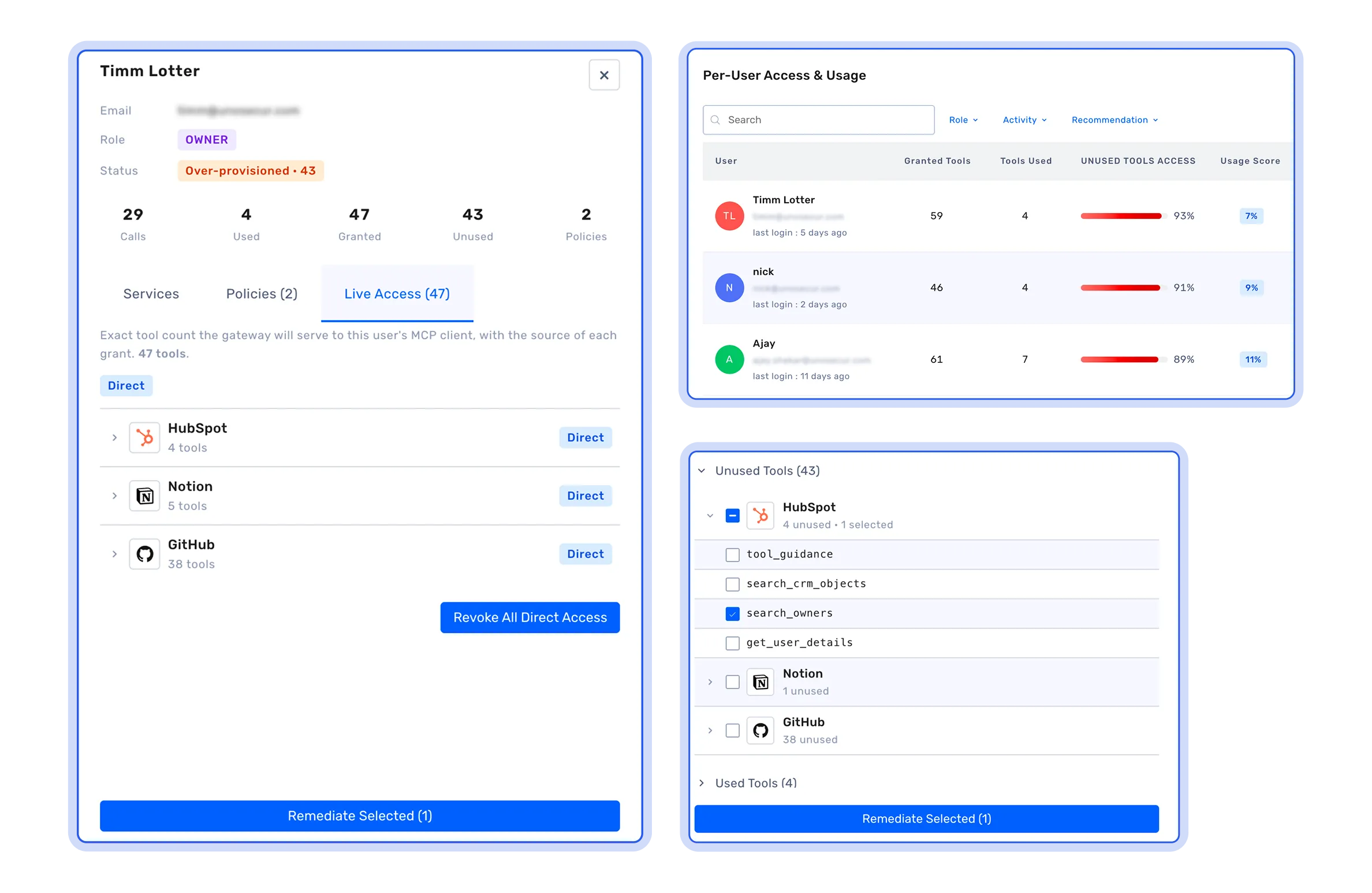
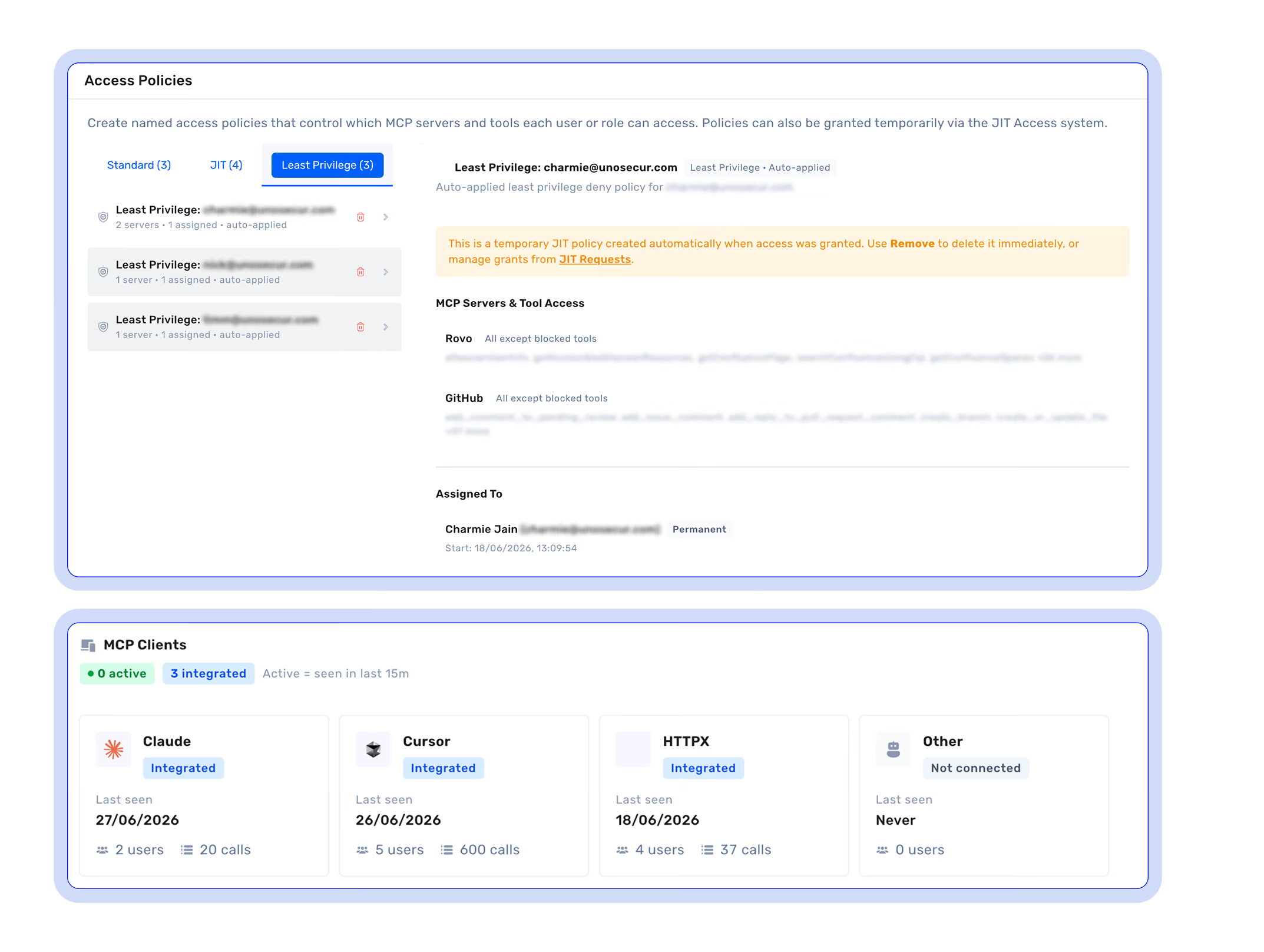
Set fine-grained access per connector, then let the usage score expose anything over-provisioned. Each agent gets right-sized toward least privilege from how it actually behaves, not from a static role.
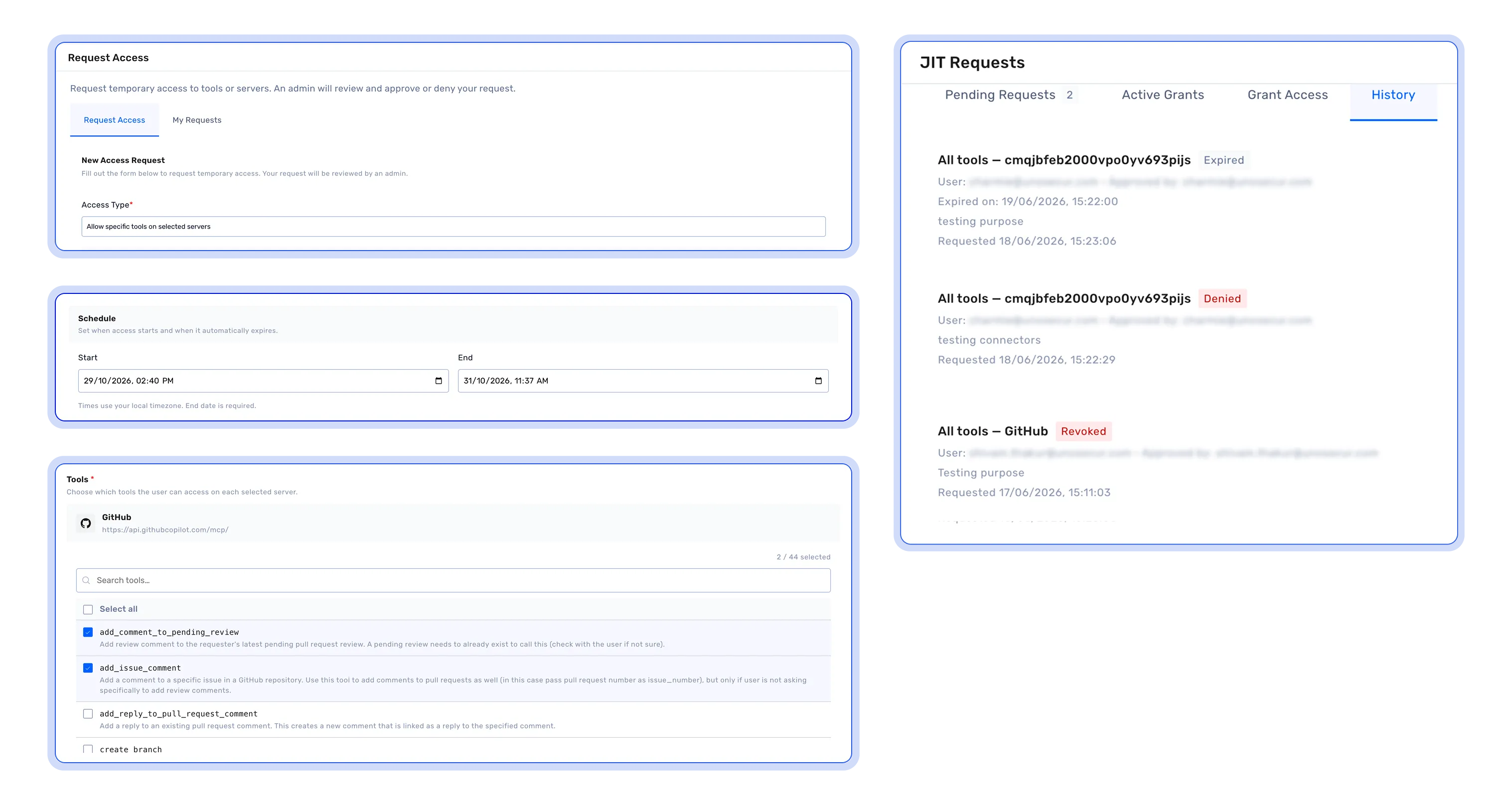
An agent requests a single tool or a full MCP server, with a justification and a time window. The access request gets logged for compliance, with an approval flow, and access closes itself when the window ends.
Unosecur analyzes agent intent, blocking or flagging sensitive tool calls with custom content rules and Data Loss Prevention (DLP) controls.
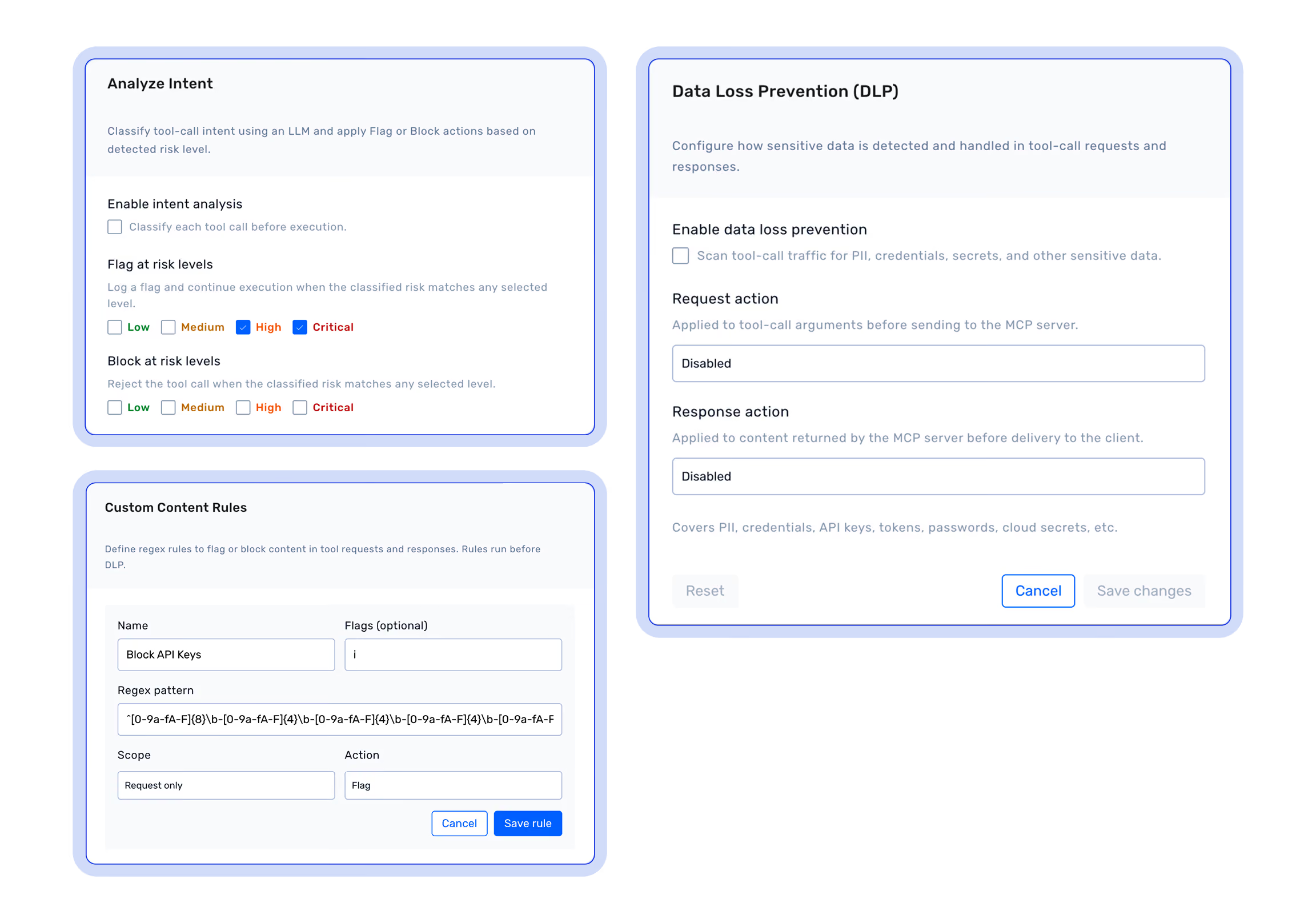
Each session carries its own verified identity, while your real credentials stay encrypted and scoped per connector. Tokens and keys never reach the agent or the model, and every decision keeps the policy and audit trail behind it.
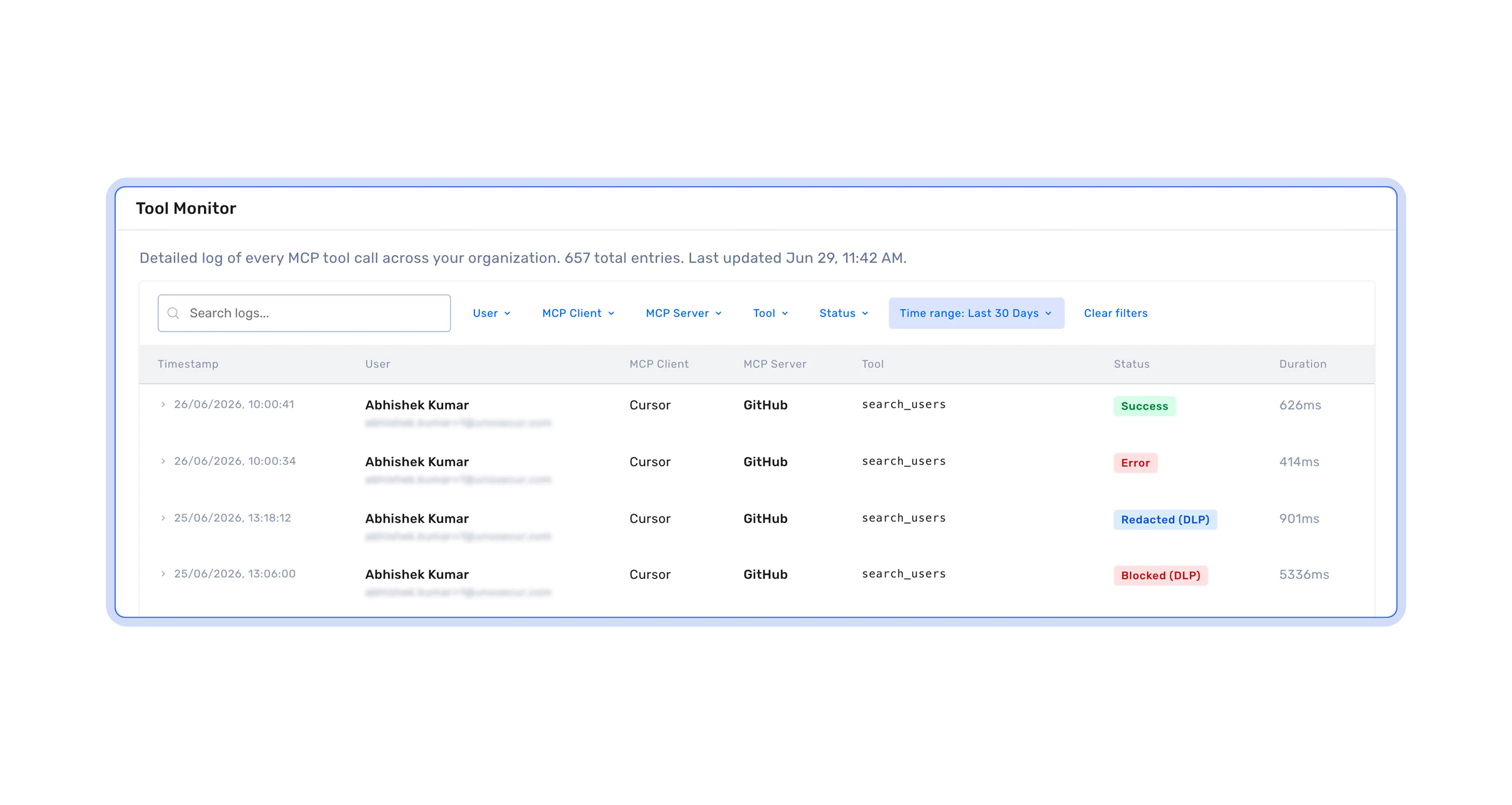
A live feed of what your agents are doing across every client and server. Tool Monitor shows each MCP tool call at runtime, with its timestamp, the agent or user behind it, the MCP client, the target server, the specific tool, the status, and how long it took.
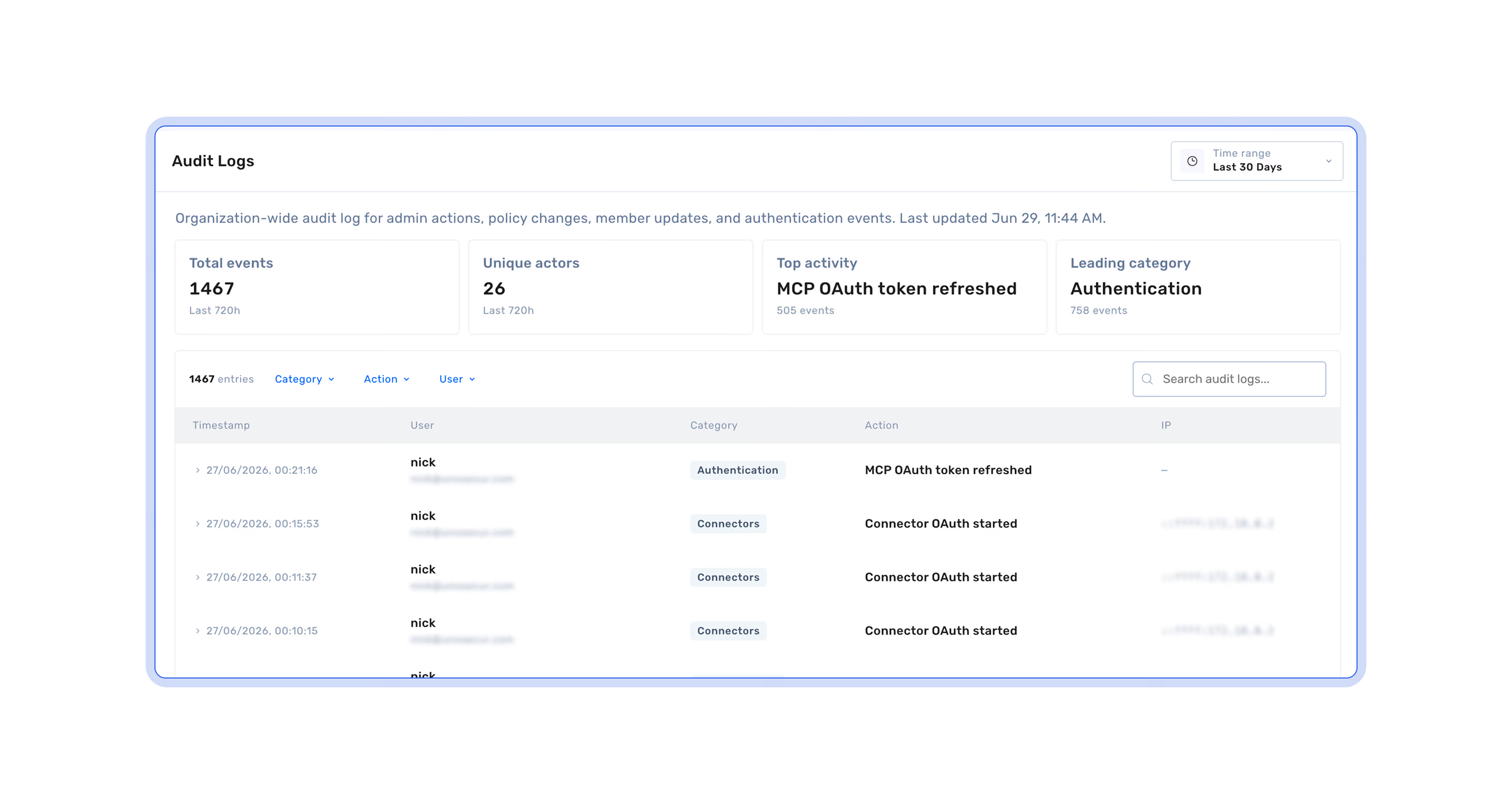
Every meaningful action is written to a durable, tamper-evident record: the identity behind it, what they did, when, and from where. Authentication, OAuth activity, connector changes, and policy edits, all in one place. So when an incident or audit hits, you can show exactly what happened and who was responsible, instead of assembling the evidence after the fact.
It runs agentless and inline, with no SDK and no changes to your agents or servers.


AI agents need scoped, ephemeral credentials, not shared service accounts. Authenticate every agent at the point of access, enforce just-in-time permissions tied to the requesting user or task, and log every tool call and resource touched. Behavioural baselining flags privilege escalation attempts. The MCP Auth Gateway sits between agents and downstream systems, so authorisation decisions happen at every hop rather than once at session start.
AI agents typically authenticate with broad OAuth scopes or static API keys, which means a compromised agent has standing access to whatever the connected SaaS account can do. Most SaaS apps cannot distinguish agent traffic from human user activity, so audit trails are misleading. The MCP Auth Gateway adds agent identity, scoped permissions, and per-call authorisation at the gateway layer instead.
Maintain an inventory of approved agents and their expected behaviour. Monitor every MCP endpoint, OAuth grant, and API key issuance for new agent identities. Behavioural analytics flag agents calling tools outside their scope or accessing resources outside their normal pattern. The MCP Auth Gateway logs every connection attempt, so shadow agents surface the moment they try to reach a protected system.
Stop using long-lived static credentials in scripts and CI/CD pipelines. Issue short-lived tokens scoped to the specific task, rotated automatically. Inject secrets at runtime rather than embedding them in code or environment files. For AI agent workflows, the MCP Auth Gateway brokers credentials per call, so no agent or pipeline holds a token longer than the operation needs.
Shadow agents run with credentials nobody is tracking, often pulled from a developer's personal account or a shared API key. They access production data, modify records, and call external APIs without governance, audit, or rate limits. When something breaks or leaks, attribution is impossible. The MCP Auth Gateway forces every agent through a known authorisation point, which removes the shadow path.
Use mutual authentication between services with short-lived tokens, scoped to the specific operation, with every call authorised against a central policy. Static API keys shared across services are the most common failure mode. Workload identity, mTLS, and per-call authorisation through a gateway layer remove the shared-secret problem. The MCP Auth Gateway extends this pattern to agent-driven calls.
Use mutual authentication between services with short-lived tokens, scoped to the specific operation, with every call authorised against a central policy. Static API keys shared across services are the most common failure mode. Workload identity, mTLS, and per-call authorisation through a gateway layer remove the shared-secret problem. The MCP Auth Gateway extends this pattern to agent-driven calls.


Your source for the latest insights and updates on advanced security solutions.
%201.svg)

.webp)

.avif)
.png)
.webp)