.avif)





%201.svg)
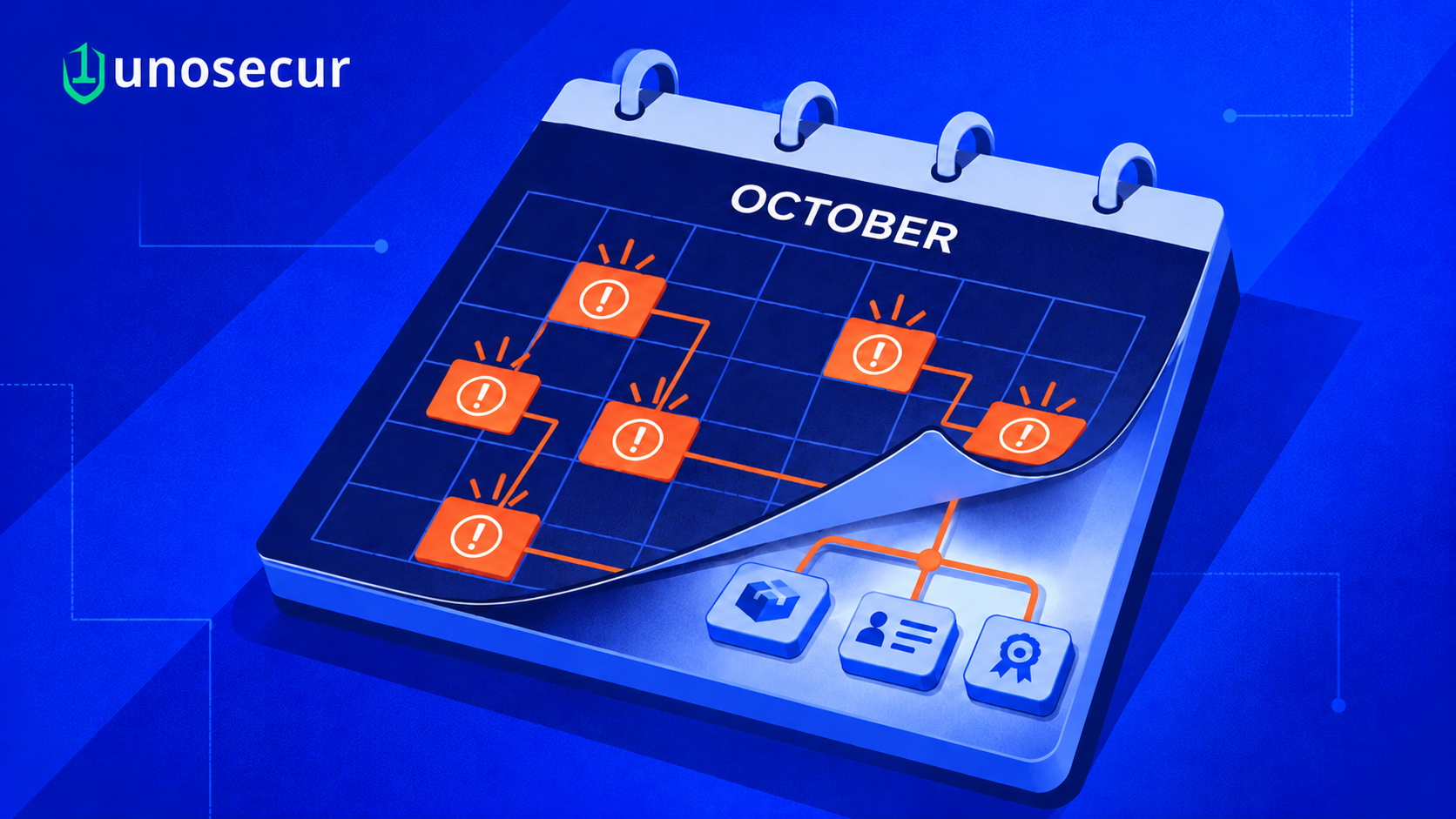
Get audit-ready reports instantly
Unosecur maps identity security controls to frameworks like ISO 27001, SOC 2, NIST, and PCI-DSS, so compliance reporting takes minutes, not weeks.
Automated evidence collection ties every identity control to its corresponding compliance requirement. Access reviews, privilege escalation logs, policy enforcement records, and remediation actions are timestamped and audit-trail ready.
Track compliance in real time
The platform continuously monitors key metrics against regulatory standards, so you always know where you stand.
Live compliance dashboards show your current posture against each framework requirement. When a control drifts out of compliance, like an identity gaining admin access without approval; you're notified immediately with remediation guidance. No surprises during audit season.
Fix gaps before they become violations
Built-in guidance shows exactly how to remediate issues so that deadlines aren't missed and compliance is always satisfied.
When a compliance gap is detected, the system provides step-by-step remediation instructions specific to your environment. Revoke the over-privileged access, update the policy, document the change, and close the finding; all tracked automatically for audit evidence. Proactive compliance, not reactive firefighting.


Everything you Need to Know

Maintain a continuously updated identity graph with evidence built in: who has access, when it was granted, who approved it, when it was last reviewed, and what the activity looked like. Auditor-ready reports should generate on demand, scoped to a control or a framework, without manual stitching. The cost of audit prep is usually a function of how fragmented the underlying telemetry is.
SOC 2, ISO 27001, PCI DSS, HIPAA, and GDPR all require evidence of least privilege, periodic access reviews, segregation of duties, credential rotation, and audit trails. Newer frameworks like NIS2 and DORA extend this to non-human identities and third-party integrations. AI governance expectations under the EU AI Act now cover AI agent access controls. Coverage gaps for NHIs are the most common finding.
Continuous discovery, complete audit trails per identity, evidence of approvals and reviews, segregation of duties enforcement, credential rotation tracking, and on-demand report generation mapped to specific control frameworks. NHI and AI agent coverage equal to human identity coverage. Read-only auditor access to the evidence layer without exposing the operational workflows. Exportable evidence in formats auditors actually accept.
Time to revoke on leaver events, percentage of identities with attributed ownership, access review completion rates, mean age of stale credentials, count of identities exceeding the privilege baseline, and number of toxic combinations detected. For NHIs and AI agents, add coverage rate against the discovered footprint. Trend metrics matter more than point-in-time numbers for showing programme maturity to auditors and the board.
Map controls from each framework to the underlying identity events that satisfy them. Continuous telemetry feeds evidence into pre-built report templates aligned to SOC 2, ISO 27001, and similar frameworks. Generate evidence on demand rather than rebuilding it before each audit. The work shifts from collecting evidence to validating control design, which is what auditors actually want to discuss.
Run the audit framework against the platform output a quarter before the auditor arrives. Identify gaps in coverage, ownership attribution, and review cadence early. Document policy decisions, exceptions, and compensating controls. Pre-build the evidence packages the auditor will request. Most audit pain comes from late discovery of gaps. Continuous monitoring removes the surprise.
Every agent invocation logged with the requesting user, the agent identity, the tools called, the resources accessed, and the authorisation decision. Provenance from the originating human through the agent to the downstream system. Tamper-evident storage with retention aligned to the regulatory window. Mapping from agent activity to specific compliance controls. Most existing logging stacks capture agent traffic as anonymous service account activity, which fails the audit standard.


%201.svg)

.webp)

.avif)
.webp)