.avif)



%201.svg)


.svg)
Introduction
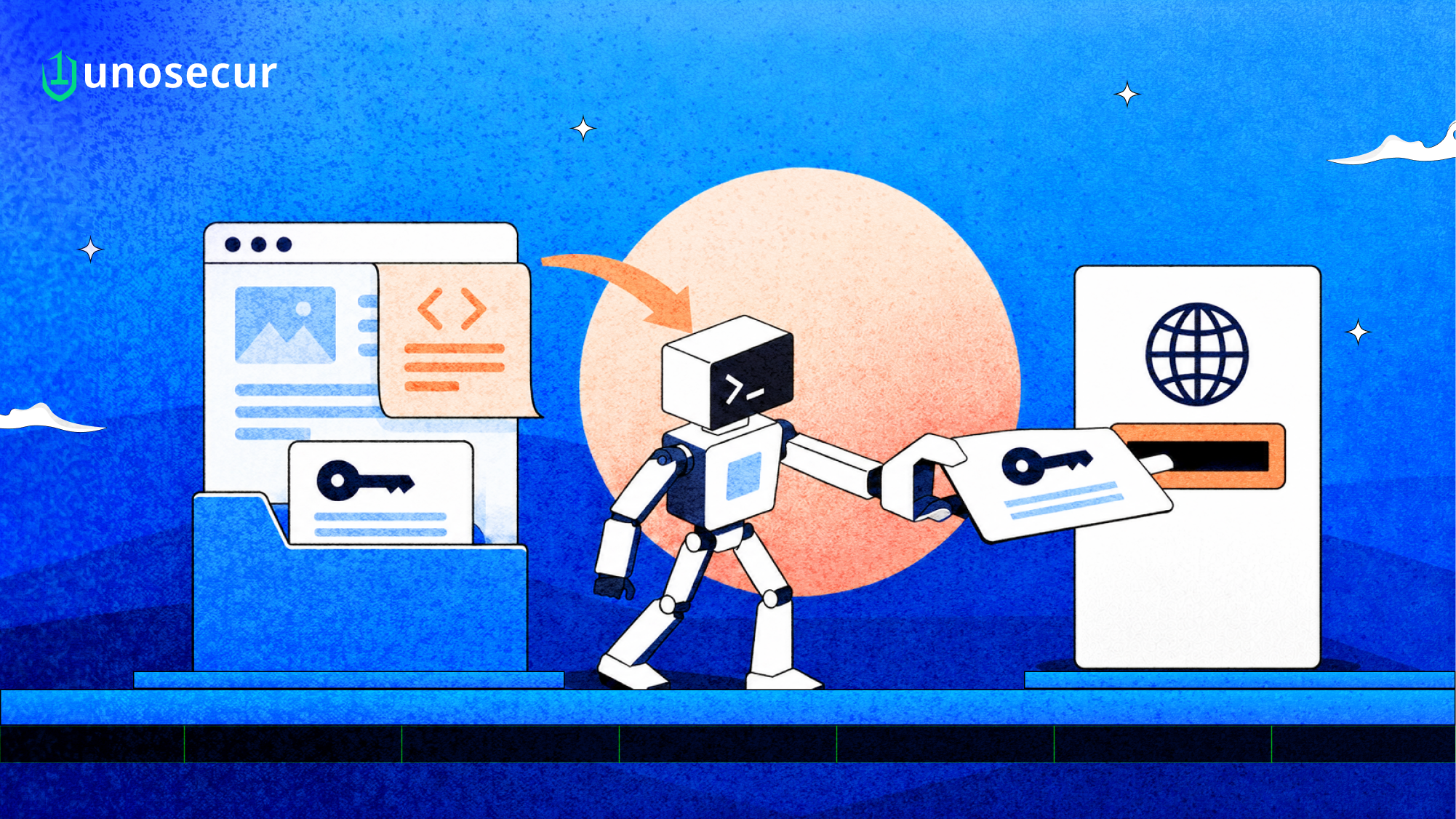
Identity does not live in one place anymore. It lives everywhere. It lives in AWS, Azure, and Google Cloud. In Okta, Microsoft Entra ID, and Ping. In GitHub, Jira, Slack, and Salesforce. In the AI agents quietly connecting to all of them. Every tool your organization runs is a place where an identity can be created, granted access, used, and forgotten. That is the real problem with modern identity security. It is not a single tool. It is the gaps between them. Unosecur now connects to more than 100 integrations across your entire stack. This blog explains why that matters, and why the number itself is not the point.
Why fragmentation is the real risk
Most enterprises did not choose to fragment their identity environment. It happened one tool at a time. A cloud migration added AWS and its IAM roles. A productivity rollout added Google Workspace and its service accounts. A developer team adopted GitHub. A support team adopted Zendesk. An identity provider was layered on top to manage single sign-on. Each decision was reasonable on its own. Together, they created an identity environment spread across dozens of disconnected systems, each with its own access model, credentials, and idea of who should be able to do what. The result is not just operational overhead. It is a security blind spot. When identity data is scattered across tools that do not communicate, no one has a single answer to the most basic security question: who has access to what, and should they? An attacker does not need to breach a firewall to exploit this. They need to find the one identity, in the one tool, that nobody was watching.
The exposures that hide in the gaps
Fragmentation creates specific, recurring exposures. Every one of them lives in the space between tools, which is exactly why single-tool security misses them.
Shadow admins.
An account accumulates administrative privileges through indirect group memberships or nested permissions. It does not appear on any admin list, but it can act like an administrator. In a fragmented environment, nobody sees the full privilege path.
Toxic privilege combinations.
Two permissions that are harmless on their own become dangerous together. Read access in one system plus write access in another can enable a data exfiltration path that neither tool would flag independently.
Standing privileges.
Access granted for a one-time task that never gets revoked. The permission sits there indefinitely, a pre-provisioned entry point for anyone who compromises the account.
Partially offboarded accounts.
An employee or contractor leaves. Their primary account is deactivated, but their access in three peripheral systems is missed. Those accounts remain live, unowned, and unmonitored.
Lateral movement and identity drift.
Over time, identities accumulate access far beyond what their role requires. When one is compromised, the attacker inherits every permission it drifted into, and can move across systems using entirely legitimate credentials.
None of these is an exotic attack. They are the everyday consequence of managing identity in silos.
What connects the stack actually changes.
Connecting your tools is not about building another dashboard to check. It is about correlation. When every identity source feeds into one place, the exposures that were invisible in isolation become obvious in context. The shadow admin becomes visible because the full privilege path is now traceable across systems. The toxic combination surfaces because both permissions are finally in the same view. The partially offboarded account is flagged because the departed user's access is correlated across every connected tool, not just the primary directory.
This is the difference between having data and having answers. Most enterprises already have identity data in every tool they run. What they lack is a single layer that pulls it together and turns it into something a security team can act on.
Coverage across every layer of identity
A unified view is only as good as its coverage. A tool that connects to your cloud providers but not to your identity providers, or to your SaaS apps but not to your AI agents, still leaves gaps. And gaps are where the risk lives. Unosecur's 100+ integrations span every layer where identity exists.
Cloud accounts.
AWS, Azure, and Google Cloud Platform, where IAM roles, service accounts, and workload identities are created faster than they can be tracked.
Identity Providers.
Okta, Microsoft Entra ID, Ping, Google Workspace, JumpCloud, and AWS IAM Identity Center are the systems of record for your people.
Applications and SaaS.
Salesforce, GitHub, GitLab, Snowflake, Databricks, Notion, and dozens more, each with its own access model and credentials.
Ticketing and communication.
Jira, ServiceNow, Zendesk, Slack, and PagerDuty are the operational tools where access requests, changes, and sensitive data frequently live.
AI and modern infrastructure.
Connectors for AI platforms and the tools agents reach, so machine and agent identities are governed with the same depth as everyone else. The breadth is the point. Identity risk does not respect tool boundaries, so identity security cannot either.
Visibility, intelligence, and action
Connecting the stack delivers three things in sequence, and each one builds on the last. First comes visibility. Every identity, across every connected system, in one place. You can finally see who has access to what, what they did with it, and what they can reach next.
Then comes intelligence. Raw visibility is a list. Intelligence is understanding which of those identities represents a risk, which privilege is unused, which account has drifted, and which combination is dangerous. Correlation across systems is what turns a list into a set of prioritized findings.
Finally comes action. Seeing a risk is not the same as closing it. A unified layer lets you right-size access based on actual activity, enforce least privilege, and remediate the exposures that matter, rather than drowning in alerts that do not. Visibility without intelligence is noise. Intelligence without action is a report nobody reads. The value is in all three, working together.
In minutes, not months
The traditional objection to unifying an identity stack is time. Integration projects have a reputation for taking quarters, consuming engineering resources, and delivering value long after the risk that prompted them has changed. Unosecur's connectors are built to change that. Connecting your cloud, SaaS, and identity tools is designed to take minutes, not months, so the time between deciding to close your identity gaps and actually seeing them is measured in a single session, not a roadmap.
That speed matters because the risk is not waiting. Identities are being created, granted access, and abandoned across your tools every single day. The sooner they are in one view, the sooner the gaps close.
Conclusion
The number 100+ is not an achievement. The achievement is what those connections make possible: a single, correlated view of every identity in your environment, no matter which of your many tools it happens to live in. Fragmentation is the condition in which every modern enterprise operates. The tools are not going away, and the list is only getting longer. The question is whether all that scattered identity data stays scattered, or whether it finally comes together into something your security team can see, understand, and act on.
Your identity stack lives in 100+ tools. It is time your security saw them as one.
See every connector, and every identity, in one place. Explore integrations at unosecur.com to unify your identity stack.



.png)
.webp)
%201.svg)


.webp)

.avif)
.webp)