.avif)




%201.svg)
.webp)
Bringing identity blind spots into view
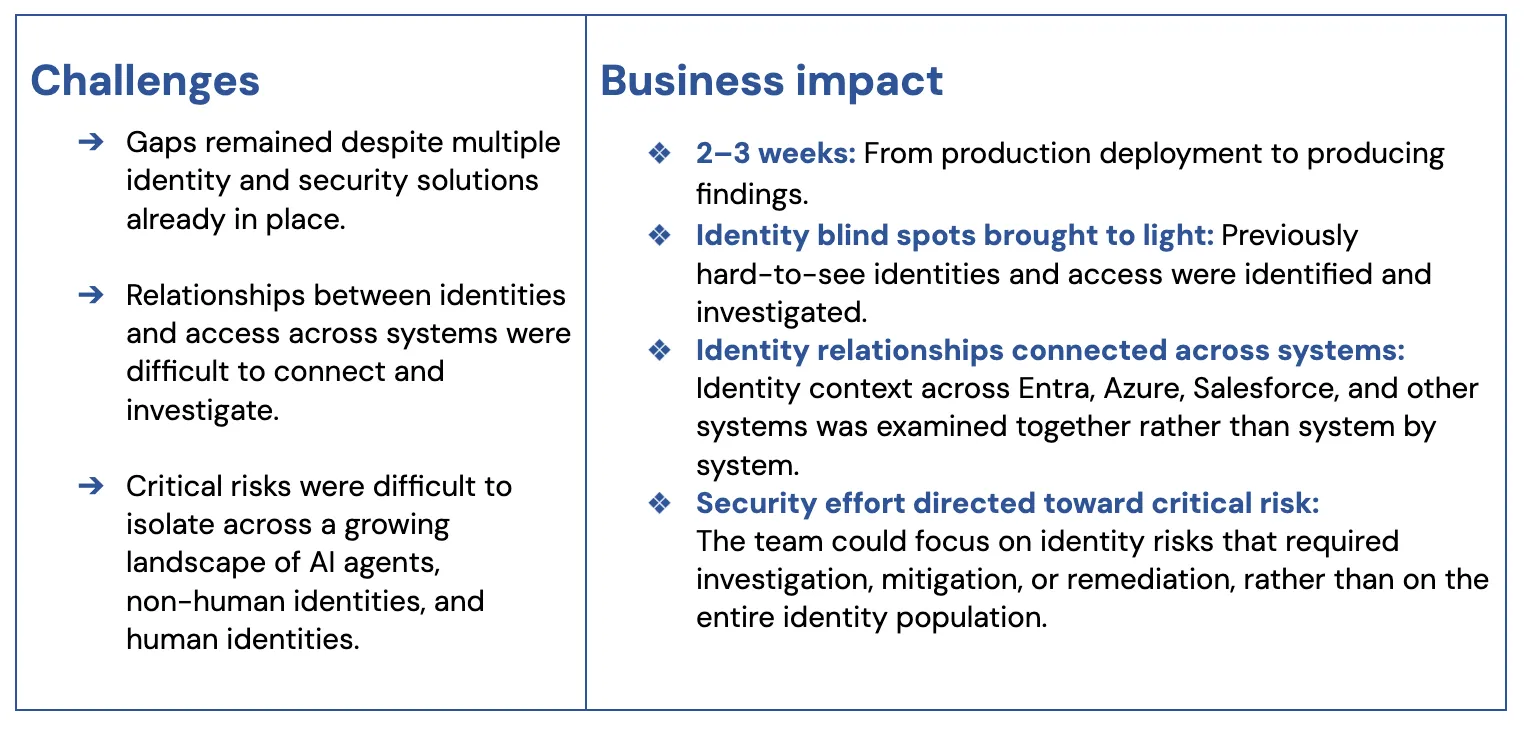
Ottobock already had multiple identity and security solutions in place. Yet gaps remained in its understanding of the identities operating across the enterprise. Some accounts had cryptic identifiers originating from earlier system implementations. Others were dormant. AI agents and Non-human identities could remain active without the joiner, mover, and leaver lifecycle used to govern employees.
The scale compounded the problem. The number of identities across Ottobock's environment was significantly greater than the number of human users. Knowing how many identities existed was therefore not enough. Ottobock needed to identify which accounts warranted investigation and understand the risks associated with them. Ottobock selected Unosecur to close these visibility gaps.
Today, the security team can identify identities that warrant investigation, examine the associated access, and determine whether mitigation or remediation is required. Unosecur provides this visibility across the broader identity landscape, spanning human identities, non-human identities, and AI agents, and connecting them to the access and systems around them.
Connecting identity relationships across systems
Before Unosecur, identities and access were viewed across separate systems. An account in Entra could relate to access in Azure, Salesforce, or another application, but those relationships were difficult to establish when each environment was examined independently.
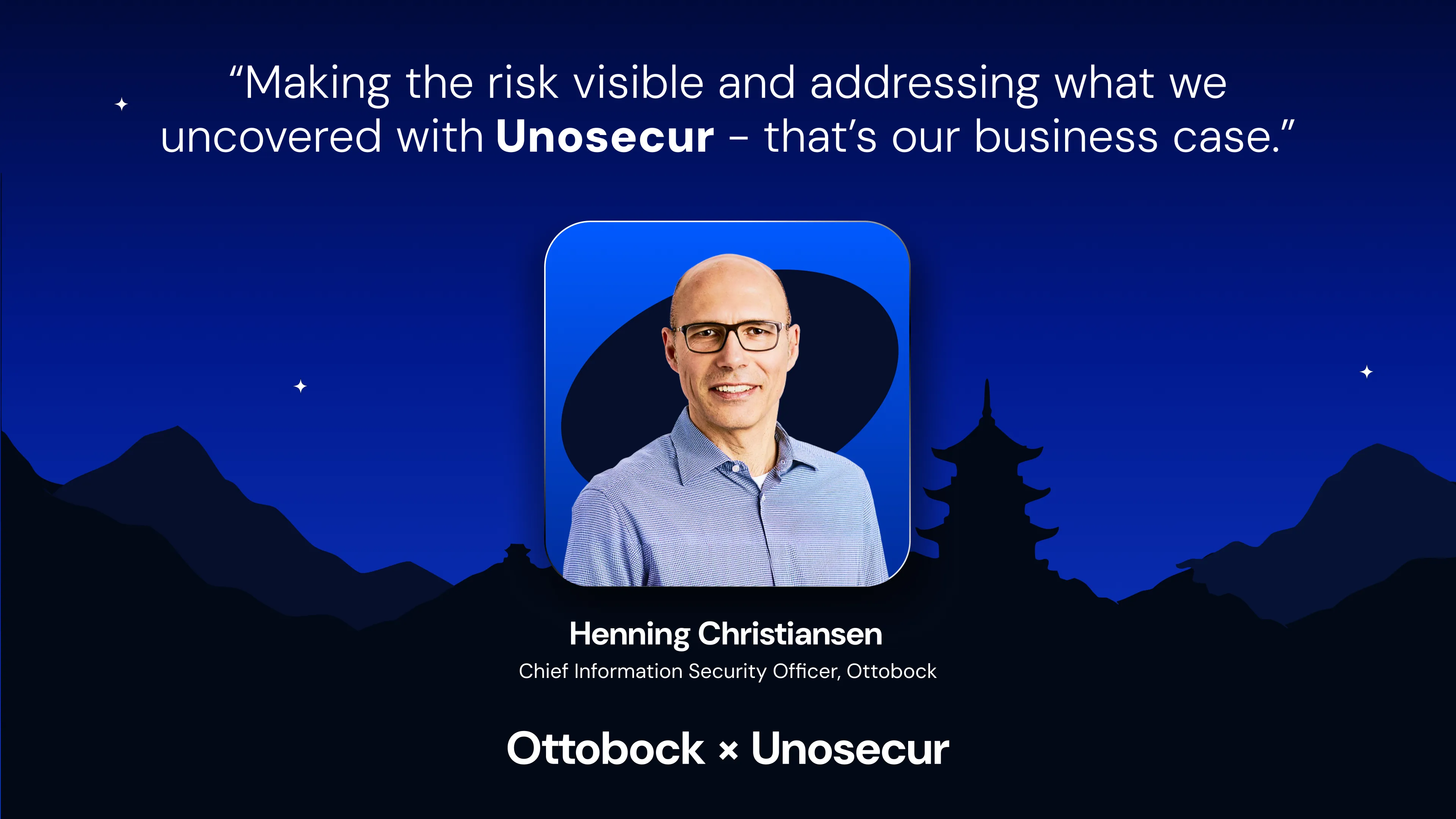
This cross-system challenge became an important consideration when Ottobock evaluated identity security platforms. Unosecur's ability to connect identities across systems was a key differentiator. Ottobock can now examine identity relationships across Entra, Azure, Salesforce, and other connected systems in one context. Its security team can see how an identity relates to accounts and access elsewhere in the environment when investigating potential exposure.
Focusing security effort on critical risk
Ottobock's identity landscape extends beyond its employees to non-human identities and, increasingly, AI agents. Treating every identity and access relationship as equally important would make it difficult to determine where security attention was actually required. Ottobock needed a way to distinguish critical identity risks from the wider identity population.
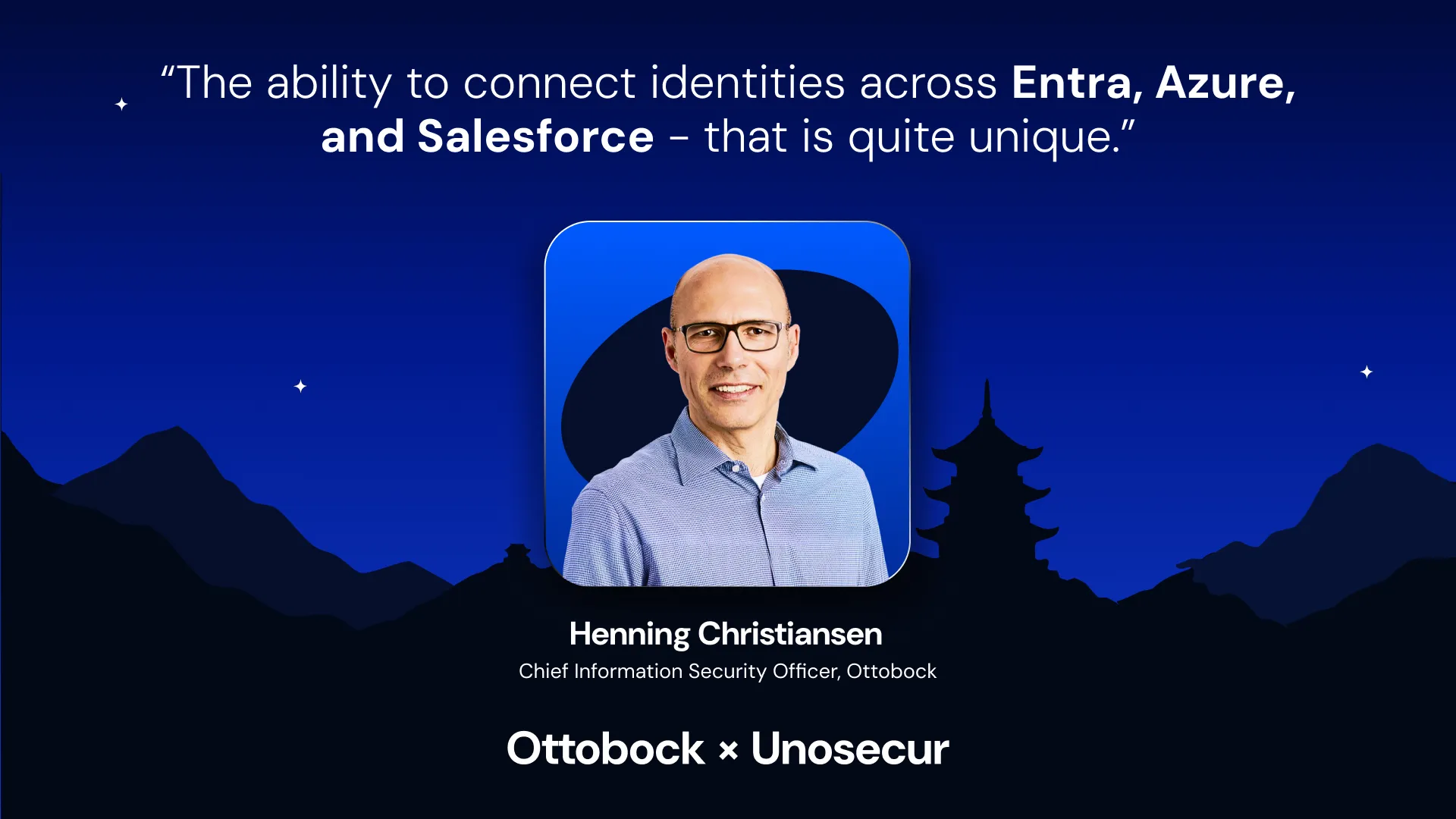
With Unosecur, the security team can identify risks that warrant investigation and examine them with the surrounding identity and access context. It can then determine where mitigation or remediation is required. For Ottobock, this changes how success is measured. The objective is not primarily to reduce administrative effort. It is to direct security efforts toward finding and reducing critical risk.
Risk efficiency
- Identify: Find identity risks that require attention.
- Understand: Establish the identities, access, and cross-system relationships behind the risk.
- Address: Mitigate or remediate the identified risk.
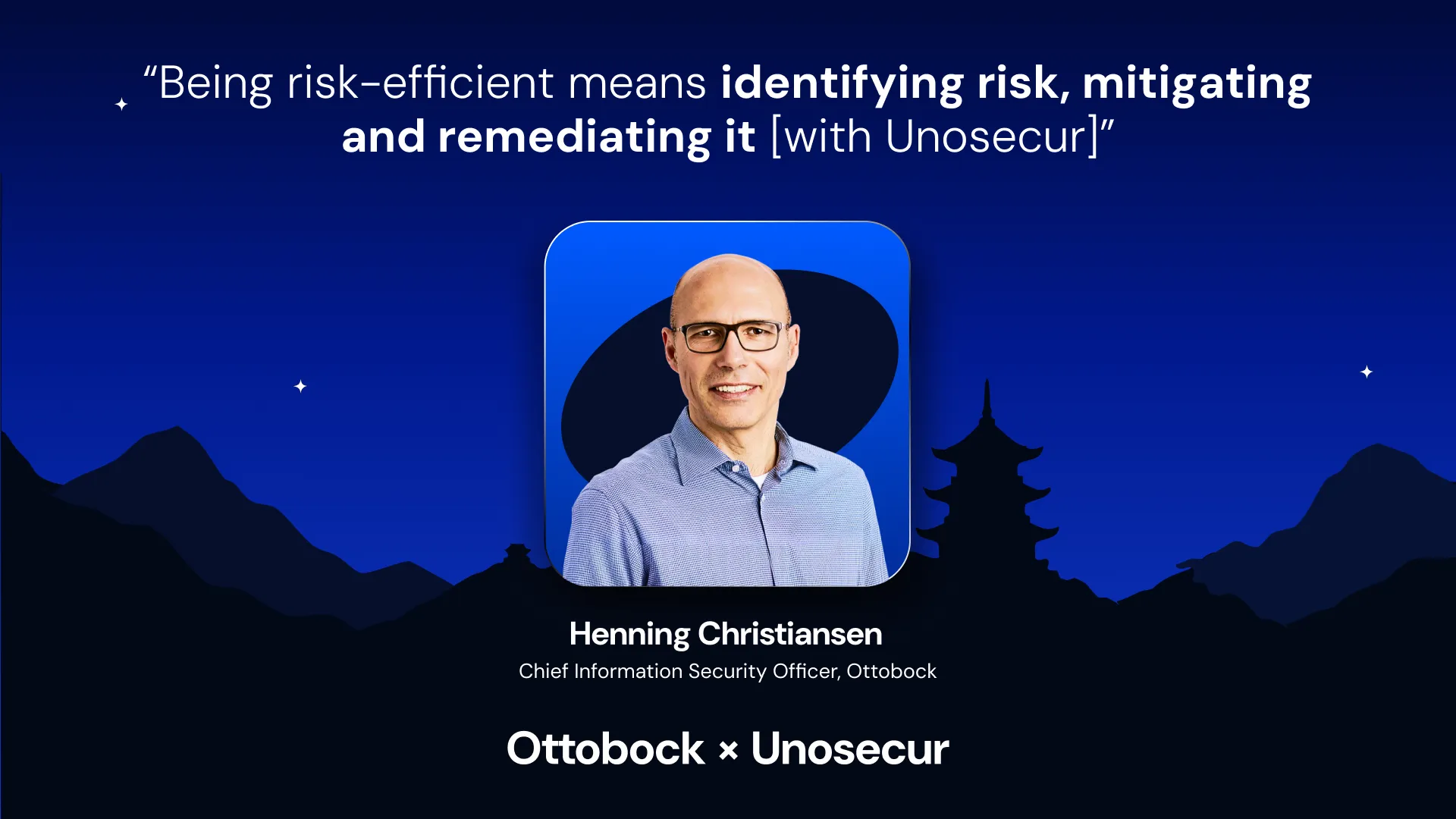
About Ottobock
Ottobock SE & Co. KGaA is a global leader in medical technology dedicated to helping people maintain or regain mobility and independence. Its portfolio spans prosthetics, orthotics, wheelchairs, and rehabilitation solutions used by patients, clinicians, and healthcare providers worldwide.
With nearly 9,300 employees across 45 countries, approximately €1.6 billion in annual core revenue, and roughly 420 patient care clinics, Ottobock operates a global technology environment supporting both its medical technology business and patient care network.




%201.svg)
.webp)

.avif)
.webp)