The Advantage
Strategic advantage: Identity-centric agent governance
By bringing AI agent telemetry into the same identity fabric as humans and non-human identities, security teams gain the context traditional inventories lack.

%201.svg)
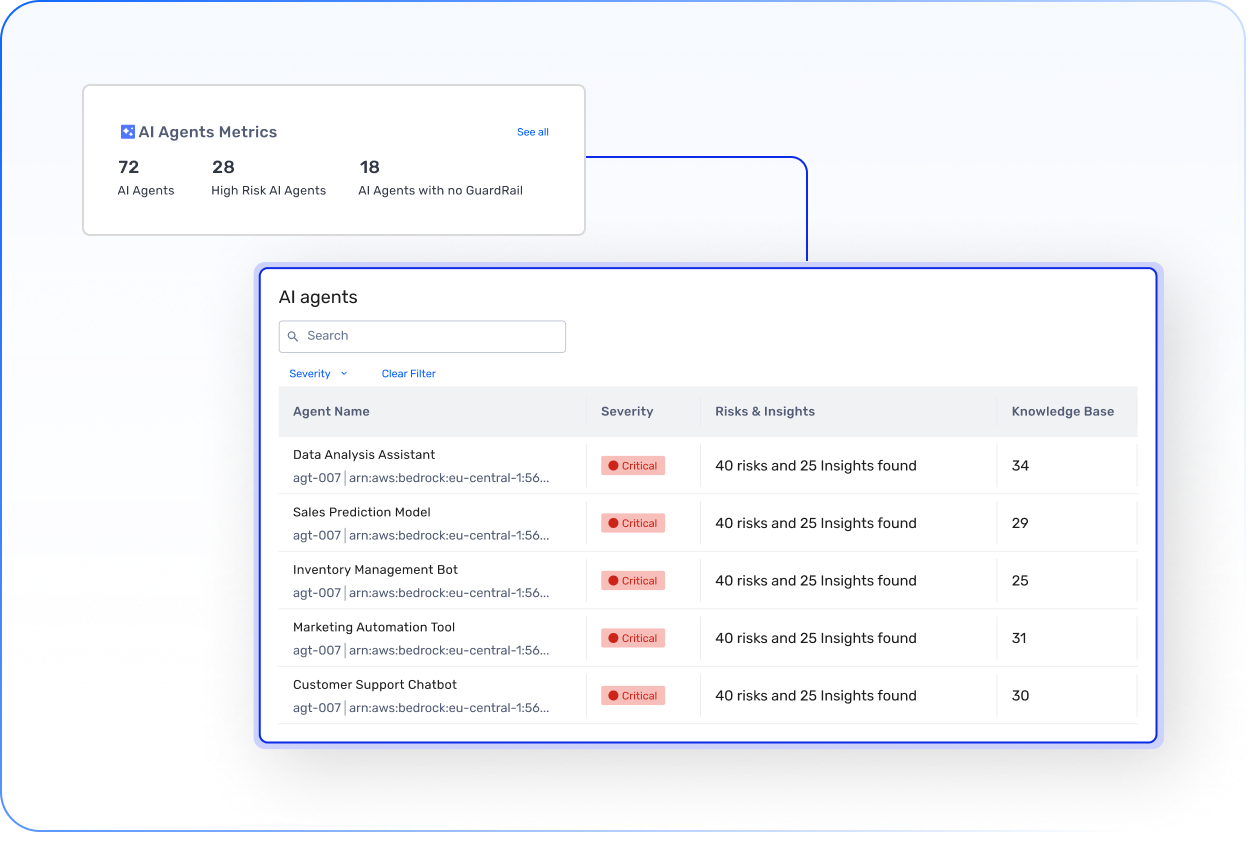
Inventory every AI agent, expose the hidden permissions behind them, and reconcile theoretical access with actual operational use. Apply the same rigorous governance to agents as you do to executive-level human identities.
AI agents don't operate in isolation. They interact with identities, applications and resources across your environment, creating new access relationships that security teams need to understand.

AI agents can create access paths that bypass standard security visibility, exposing sensitive credentials and data.
.png)
Over-scoped deployment permissions can remain long after tasks are complete, creating a growing attack surface.
.png)
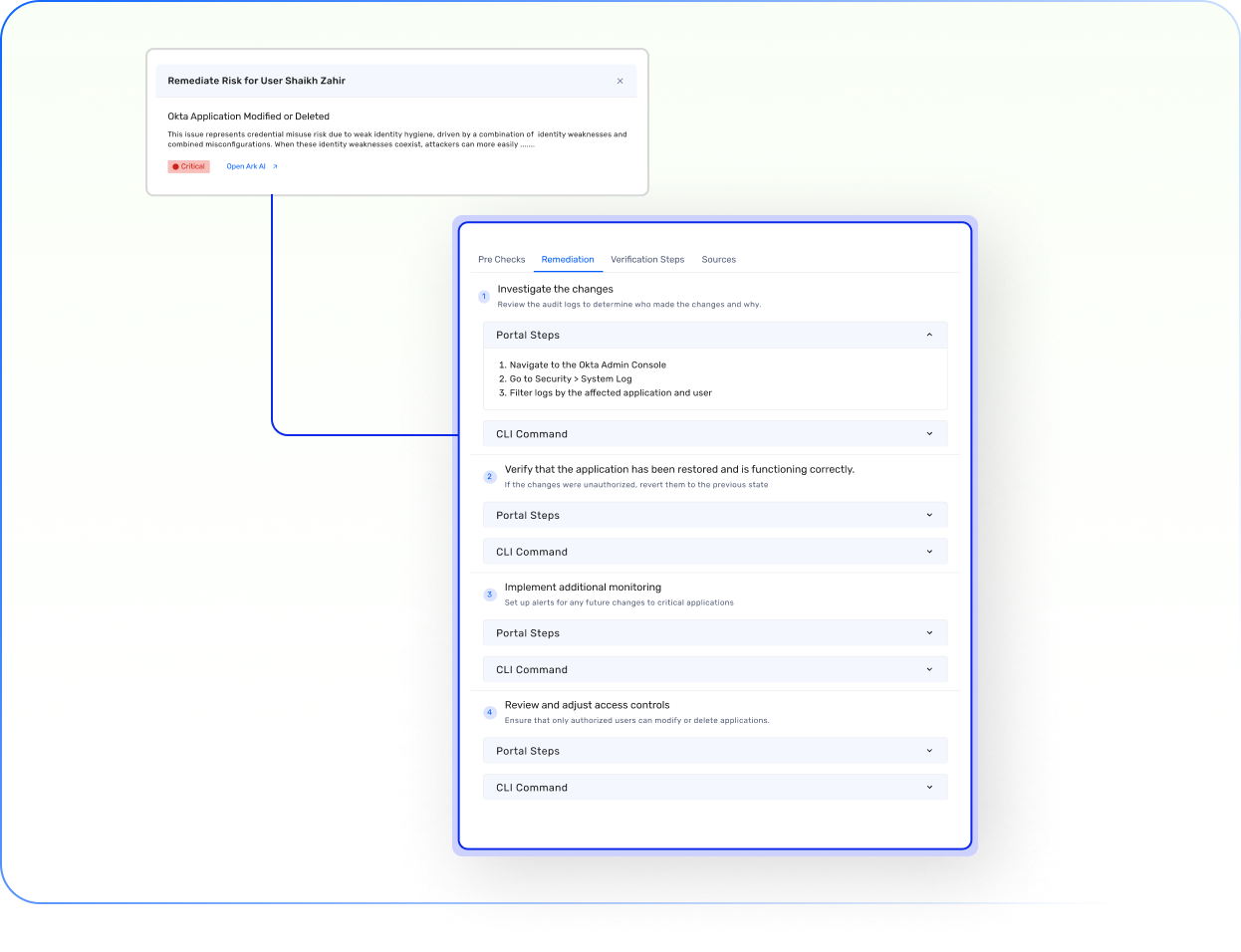
Agent-related risks often sit across disconnected platforms, making it difficult to maintain a unified view of exposure.
.png)
.png)
Unosecur bridges cloud providers, identity platforms, and SaaS applications to bring agent behavior and authority into one strategic view.





























.png)
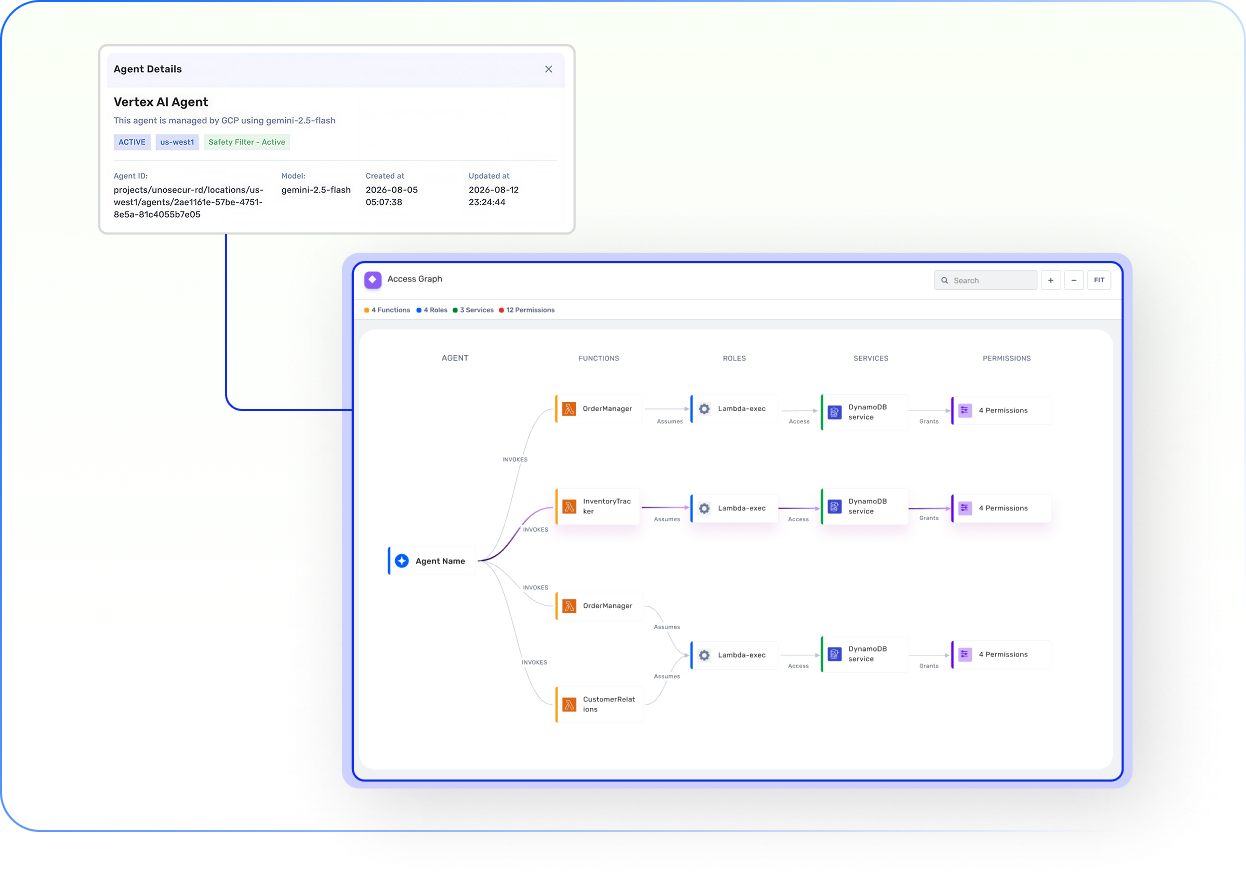
Directly trace agents through their tools to the specific service roles and data assets they are authorized to manipulate.
.png)
Compare granted access with actual usage to identify unnecessary privileges without disrupting legitimate operations.
.png)
See AI agents alongside human and non-human identities in a unified view of your identity environment.
Directly trace agents through their tools to the specific service roles and data assets they are authorized to manipulate.
Reconcile broad entitlements with observed behavior to eliminate toxic standing privileges without interrupting operations.
Unify the management of humans, non-human identities, and AI agents through a single, resilient security control plane.



AI agents do more than process information. They can invoke tools, access enterprise data, and take actions using delegated authority. This makes their access and behavior security-critical, much like privileged human or machine identities. Governing AI agents as identities gives security teams the context needed to understand what they can access, what they actually do, and how that authority was granted.
Discovering AI agents requires more than identifying the agents themselves. Security teams also need visibility into the identities, permissions, tools, and resources associated with them. An agent may rely on an underlying identity or service principal to access systems and data. Connecting these relationships helps teams understand the full context behind an agent and the access available to it.
An agent's access can extend across permissions, connected tools, underlying identities, resources, and knowledge bases. Looking at the agent in isolation does not provide the complete picture. Bringing this information together helps security teams understand where an agent is deployed, what it can access, and the potential exposure associated with that access.
The goal is not simply to remove access. It is to identify permissions that are unnecessary while preserving the access required for legitimate operations. By comparing granted access with actual usage, security teams can identify excessive or unused permissions and take targeted remediation actions based on operational context.
Blast radius depends on more than the agent itself; it includes every identity, tool, resource, and privilege reachable through its authorization paths. Graphing these relationships helps reveal whether compromise could expose sensitive data, enable destructive actions, or create pathways to additional privileged resources. Prioritizing risk by this reachable authority gives security teams a more meaningful measure of potential impact than evaluating isolated permissions.
AI agents can change over time. Their permissions, connected tools, and access relationships may evolve after deployment. Continuous visibility helps security teams identify changes in access and discrepancies between what an agent is permitted to access and what it actually uses, allowing them to address emerging exposure as the environment changes.
%201.svg)



.png)