%201.svg)

Your service account does not forget its password. It does not complain when you rotate its credentials. It does not accidentally approve an MFA prompt at midnight. But it can still become one of your most powerful identities. Service accounts, workloads, API keys, certificates, service principals, automation bots, and AI agents routinely access systems without direct human interaction. Many operate continuously and hold permissions to production infrastructure, databases, cloud resources, and business applications.
The scale has already changed. CyberArk's 2025 Identity Security Landscape study reported 82 machine identities per human identity across the surveyed organizations. It also found that 42% of machine identities held privileged or sensitive access. That creates a different identity problem. You cannot secure thousands of dynamic machine identities by applying employee IAM processes to them. Effective non-human identity security requires controls designed around ownership, credentials, privilege, behavior, and lifecycle.
Here is how to build them.
Why human IAM rules break down for machine identities
Human identity programs have a natural anchor: a person. You know who owns the account, who manages the employee, why they joined the organization, and when they leave. A non-human identity may have none of those signals.
A developer creates a service account for a deployment script. Six months later, the developer changes teams. The script still runs, the account still authenticates, and its production permissions remain active. Who owns it now? That question sits at the center of service account security.
Machine identities also behave differently. They may authenticate thousands of times per day, rotate between infrastructure instances, call APIs automatically, or exist for only minutes. Good machine identity management therefore starts by treating NHIs as a distinct identity class rather than unusual user accounts.
Step 1: Find every identity that can act without a human
You cannot secure an identity you do not know exists. Start by discovering NHIs across cloud IAM, SaaS, identity providers, CI/CD platforms, Kubernetes, databases, secrets managers, code repositories, API infrastructure, and on-premises systems.
Do not restrict the inventory to traditional service accounts. Include:
- Service accounts and service principals
- Workload and cloud identities
- API keys and access tokens
- Certificates and cryptographic identities
- Automation bots and CI/CD identities
- AI agents with delegated system access
Discovery is where many NHI governance programs encounter their first problem: a single machine can have multiple identities, and a single identity can authenticate to multiple systems. Your inventory therefore needs relationships, not just names. For each NHI, establish what created it, where it authenticates, what resources it can access, what credentials it uses, and who is responsible for it. That creates the foundation for every control that follows.
Step 2: Give every non-human identity an accountable owner
An unidentified service account is a technical problem. An unowned service account is a governance problem. Every NHI should have an accountable human or team responsible for its purpose, permissions, credentials, and retirement. Ownership also needs context.
"Platform Engineering" may technically own 500 service identities. That tells a security analyst very little during an incident. Good service account management should connect each identity to a specific application, workload, business purpose, environment, and responsible team.
If no one can explain why an identity exists, its access should immediately be a candidate for review. This single control helps expose orphaned accounts before they become forgotten privileged access.
Step 3: Stop treating long-lived credentials as permanent infrastructure
A service account with a never-expiring password is convenient. So, an API key is stored in a configuration file. That convenience becomes a liability once the credential leaks. Non-human credentials can appear in source code, CI/CD variables, container images, configuration files, logs, developer workstations, and secrets stores. If the credential remains valid for months, an attacker has a long window to use it.
Strong service account security reduces that window. Where the platform supports it, prefer short-lived credentials, workload identity, certificate-based authentication, managed identities, or federated access over static secrets.
When persistent credentials remain necessary, automate their rotation and monitor their use. The objective is simple: compromise should have an expiration time.
Step 4: Ask what the machine can do, not what role it has
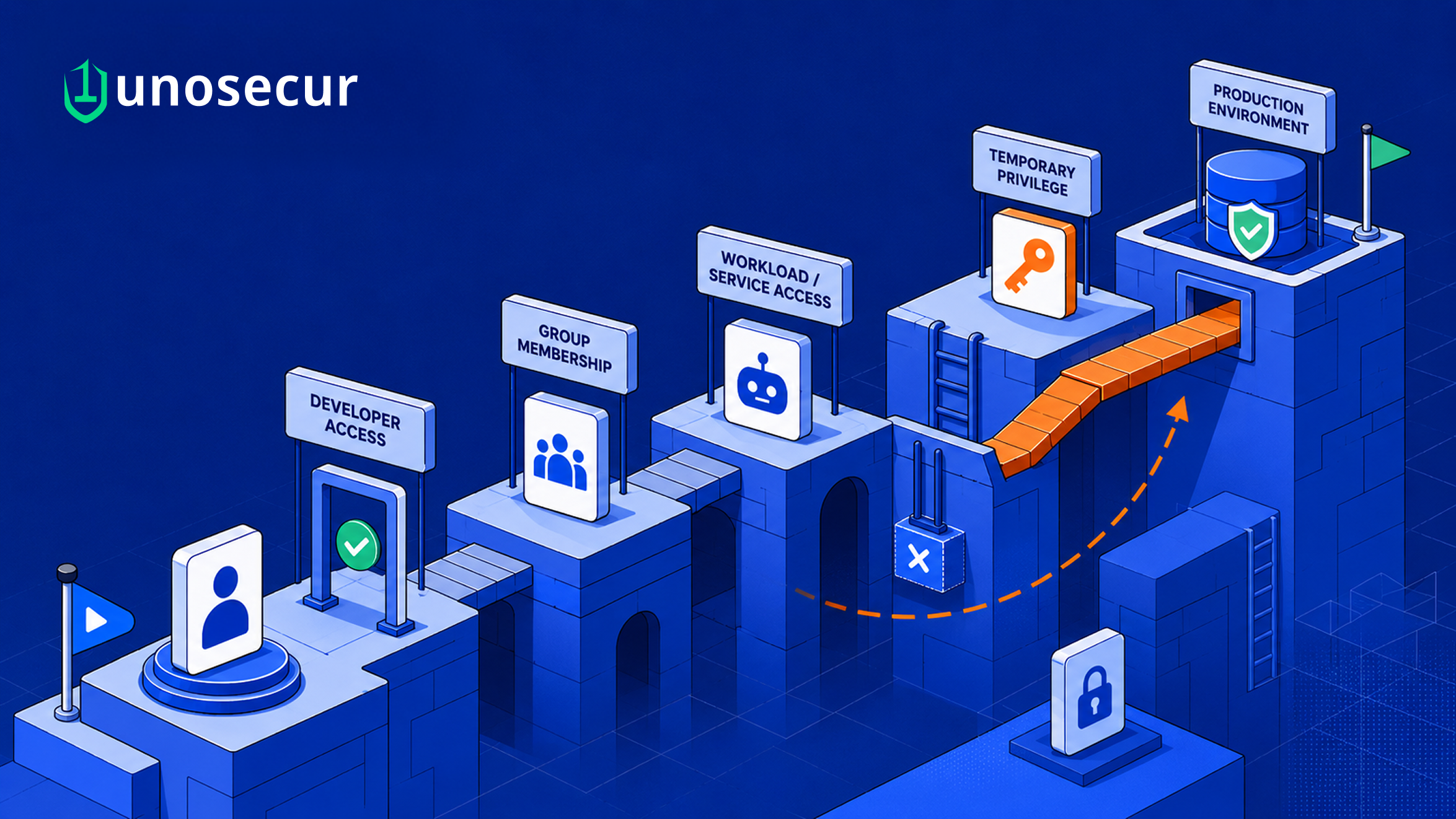
Credential security is only half the problem. The next question is privilege. A service principal may have one assigned role but still inherit access through groups, cloud policies, resource policies, trust relationships, or another role it can assume. That makes effective access more useful than assigned access.
Apply least privilege access by comparing what the identity can do with what its workload actually requires. Unused permissions deserve attention. So do wildcard permissions, cross-account access, privilege-escalation paths, and rights to modify other identities. The risk is especially high for automation.
A human administrator may use privileged access for a few minutes. A machine with the same privilege can use it continuously. Reducing standing privilege therefore limits the damage possible if the machine credential is stolen.
Step 5: Make the identity lifecycle follow the workload lifecycle
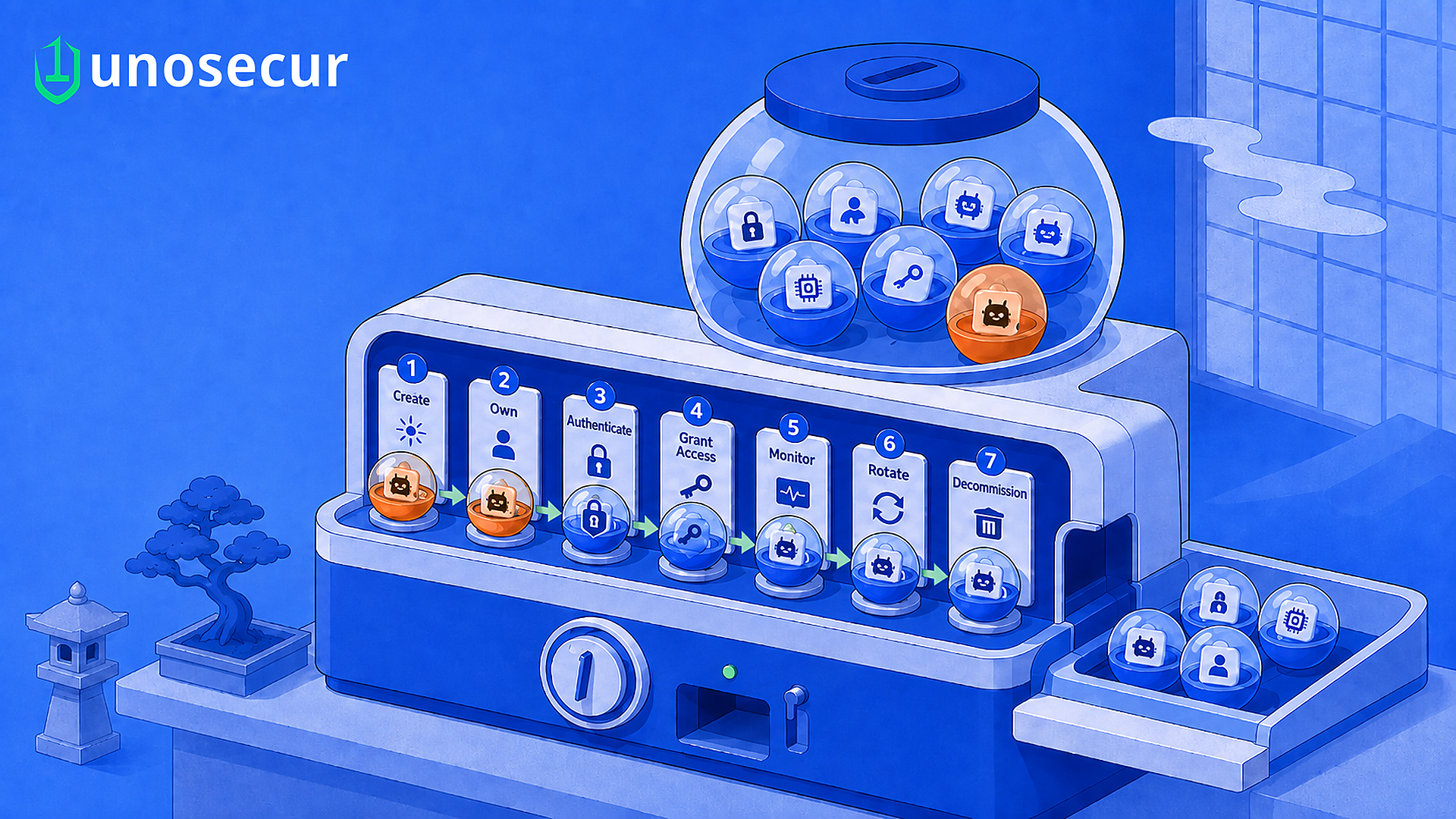
Human accounts usually have joiner, mover, and leaver processes. Machines need their own equivalent. When an application is deployed, its identity should be created with defined ownership and permissions. When its responsibilities change, access should change with it. When the workload disappears, the identity and credentials should disappear too.
This is where NHI governance becomes operational. Build lifecycle controls around creation, approval, credential issuance, privilege changes, rotation, ownership review, inactivity, and decommissioning. Do not rely on someone remembering to delete the account. A machine identity without an active workload or an accountable owner should automatically trigger a review.
Step 6: Learn what normal looks like for each machine
Traditional identity monitoring often asks whether a login looks unusual for a person. For machines, the useful signals are different. A payroll integration that suddenly queries a development database is unusual. A CI/CD identity that authenticates outside its expected pipeline warrants investigation. A service account that has always read data but suddenly modifies IAM policy may indicate compromise.
This is why machine identity management needs behavioral context. Monitor authentication source, resource access, permission use, credential changes, unusual privilege, new destinations, and deviations from established activity.
CyberArk's 2025 State of Machine Identity Security research found that 50% of surveyed security leaders reported security breaches linked to compromised machine identities. Detection therefore cannot stop at discovering expired certificates or exposed secrets. You need to know what the identity does after authentication.
AI agents make the NHI problem more dynamic.
AI agents push these controls further. An AI agent identity may authenticate to several tools, invoke APIs, retrieve data, create resources, or perform actions on behalf of a human. That creates questions traditional service accounts rarely raise. Who delegated authority to the agent? Which user is it acting for? Which tools can it invoke? Can it delegate work to another agent? What happens when the user's permissions change?
Research published in 2026 on AI identity highlights unresolved challenges in agent identity integrity, delegation accountability, and the governance of agents operating across system boundaries. The answer is not to give every agent a shared service credential. AI agents need identifiable, scoped, auditable identities with explicit authority and revocation. The same principles still apply: know its identity, owner, permissions, credentials, and what it actually does.
Secure the identity before you secure the credential.
Many NHI programs begin with secrets management. That is necessary, but incomplete. Rotating a service account password every 24 hours does not help enough if the account has unnecessary administrator privileges. A perfectly managed certificate still represents risk if nobody owns the identity behind it.
Effective best practices for securing non-human identities therefore connect discovery, ownership, authentication, privilege, lifecycle, and runtime activity. Unosecur's Unified Identity Fabric brings human, non-human, and AI identities into a common identity security model across cloud, SaaS, identity providers, and connected infrastructure. Teams can discover NHIs, understand their access, identify excessive privilege, monitor identity behavior, and govern emerging agent identities.
The goal is not simply to know that a machine credential exists. You need to know what identity uses it, what that identity can reach, why it has that access, who owns it, and whether its behavior still matches its purpose. That is the difference between managing machine credentials and securing machine identities.



%201.svg)