
.avif)





%201.svg)
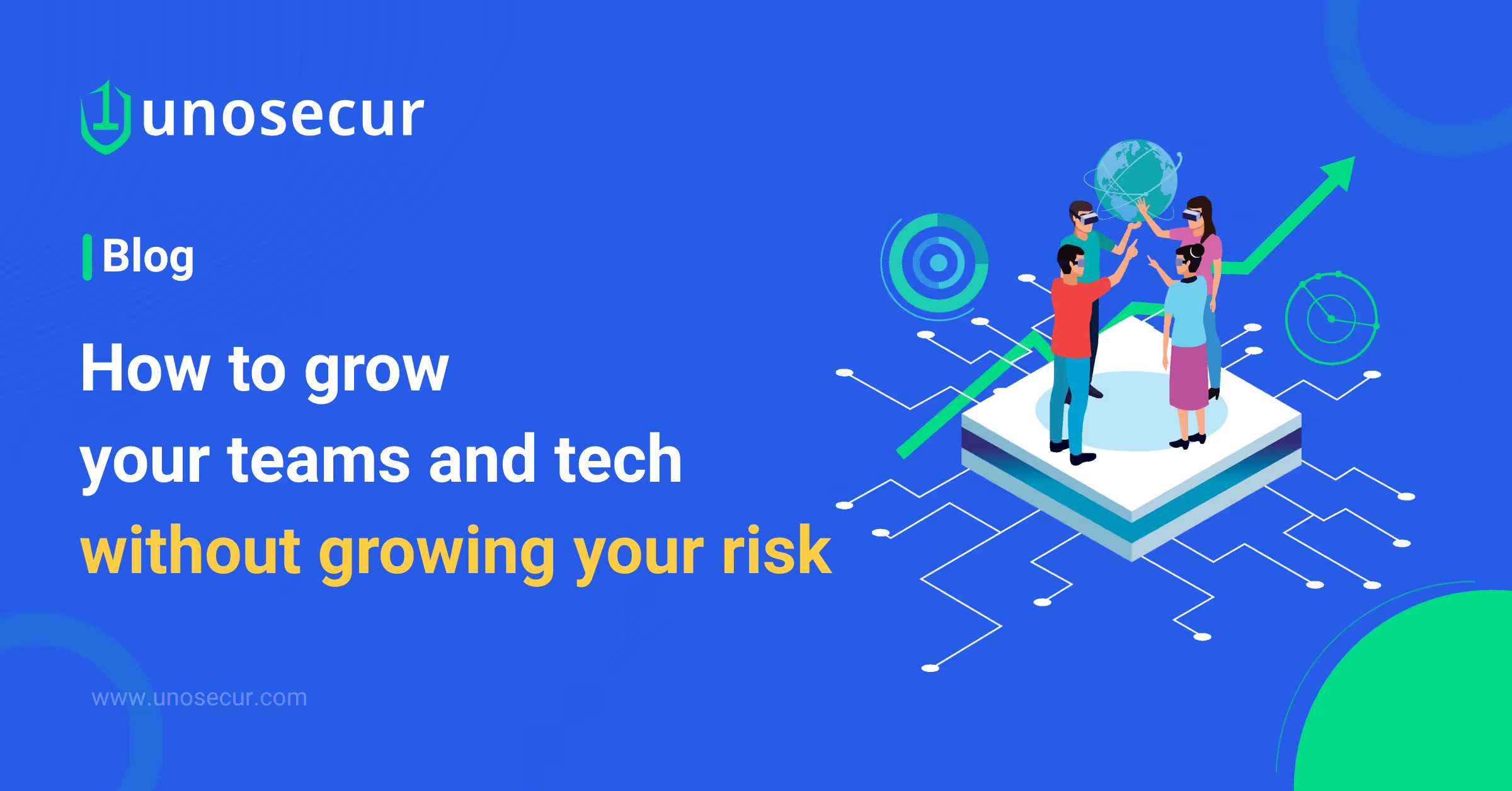
A few months back, a fast-growing SaaS company found itself in the middle of an identity crisis. Not the existential kind, but the kind that leaves your infrastructure wide open for attack.
It started with something small. A developer, racing to fix an issue, pushed an API key into a private GitHub repo. The repo was meant to be short-lived. The key was meant to be temporary. But, as is often the case, both stuck around longer than intended.
No one noticed, not right away. The key worked. The service hummed along. Meanwhile, that unused credential sat quietly, waiting.
Then came the breach.
An attacker scanning GitHub for exposed tokens found the key. Suddenly, this SaaS company’s production environment wasn’t as private as they thought. The attacker didn’t need to break in. They logged in, using valid credentials that nobody had remembered to rotate or remove.
This isn’t an isolated story. It’s the reality of how many breaches happen today. Not through dramatic hacking sequences, but through the slow, quiet buildup of identity sprawl: accounts, keys, and permissions scattered across systems, growing unchecked as the company scales.
The real problem isn’t growth: it’s how we manage growth
As your business expands, identities multiply fast:
- New hires, new contractors, new vendors.
- More apps, more cloud services, more automation.
- Service accounts, bots, API keys, non-human identities quietly doing their jobs in the background.
Every one of these identities comes with access. And when that access isn’t managed continuously, old accounts linger, permissions accumulate, or machine credentials go unchecked. Eventually, your business becomes vulnerable to identity-based attacks.
The most common mistake? Relying on one-time access decisions and periodic reviews to govern something that changes every single day.
Consider how this typically plays out:
- Someone joins the team - they get access.
- They leave - maybe someone remembers to revoke it.
- A bot account is created - but no one circles back to trim its permissions.
- A vendor integration goes live - but months later, the access token is still active, even if the vendor is no longer in use.
When your company’s growth outpaces your ability to keep these doors locked, you aren’t just growing fast. You’re growing blindfolded, and the attackers count on it.
Why traditional identity management fails growing enterprises
The truth is, most identity management strategies aren’t built for speed. They’re built for manual control:
- Quarterly access reviews.
- Spreadsheet-based permission tracking.
- Dependency on IT teams to manually revoke or adjust access.
These processes might work when your organization is small. But at scale, they break down:
- Permissions stack up.
- Shadow IT grows unchecked.
- Orphaned accounts remain active.
- Critical identities, especially non-human ones, remain outside the security radar.
This gap between how identity works and how businesses grow is where the real risk lies.
The smarter way: Continuous identity security that grows with you
The right approach to identity security doesn’t slow your business down. It keeps pace with your growth.
Here’s what that looks like:
Continuous identity discovery and visibility
Keep an always-updated inventory of every identity - both human and machine - and the access each holds. Automate the discovery process across your hybrid, multi-cloud, and on-prem environments.
Automated least-privilege enforcement
Stop permissions from stacking up. Dynamically enforce least privilege as your teams, vendors, and automation grow. Ensure that access rights match current roles and needs: no more, no less.
Real-time detection of identity misuse
Forget waiting for the next quarterly review. Detect credential misuse, privilege escalation, and lateral movement as they happen. Monitor login behaviors and flag unusual activity immediately.
No-code access governance
Make security easy for your business owners and managers to adopt. Use no-code workflows for access approvals, just-in-time (JIT) access requests, and policy adjustments. Eliminate standing privileges without disrupting operations.
Built-in compliance and reporting
Stay audit-ready without the scramble. Align your identity policies with compliance standards like ISO 27001, SOC2, PCI DSS 4.0, and GDPR. Automate evidence gathering and reporting, so your security efforts translate directly into audit success.
Scale your business, not your attack surface
Growth shouldn’t mean risk. But unless your identity management strategy evolves with your business, that’s exactly what happens.
The fix? Move from reactive, manual identity governance to a proactive, automated identity security posture - one that gives you full control and visibility without slowing your teams down.
If you'd like to explore how identity-first security can scale with your business, start with a free risk assessment. Learn more here.



.png)
%201.svg)



.webp)

.avif)