.avif)





%201.svg)

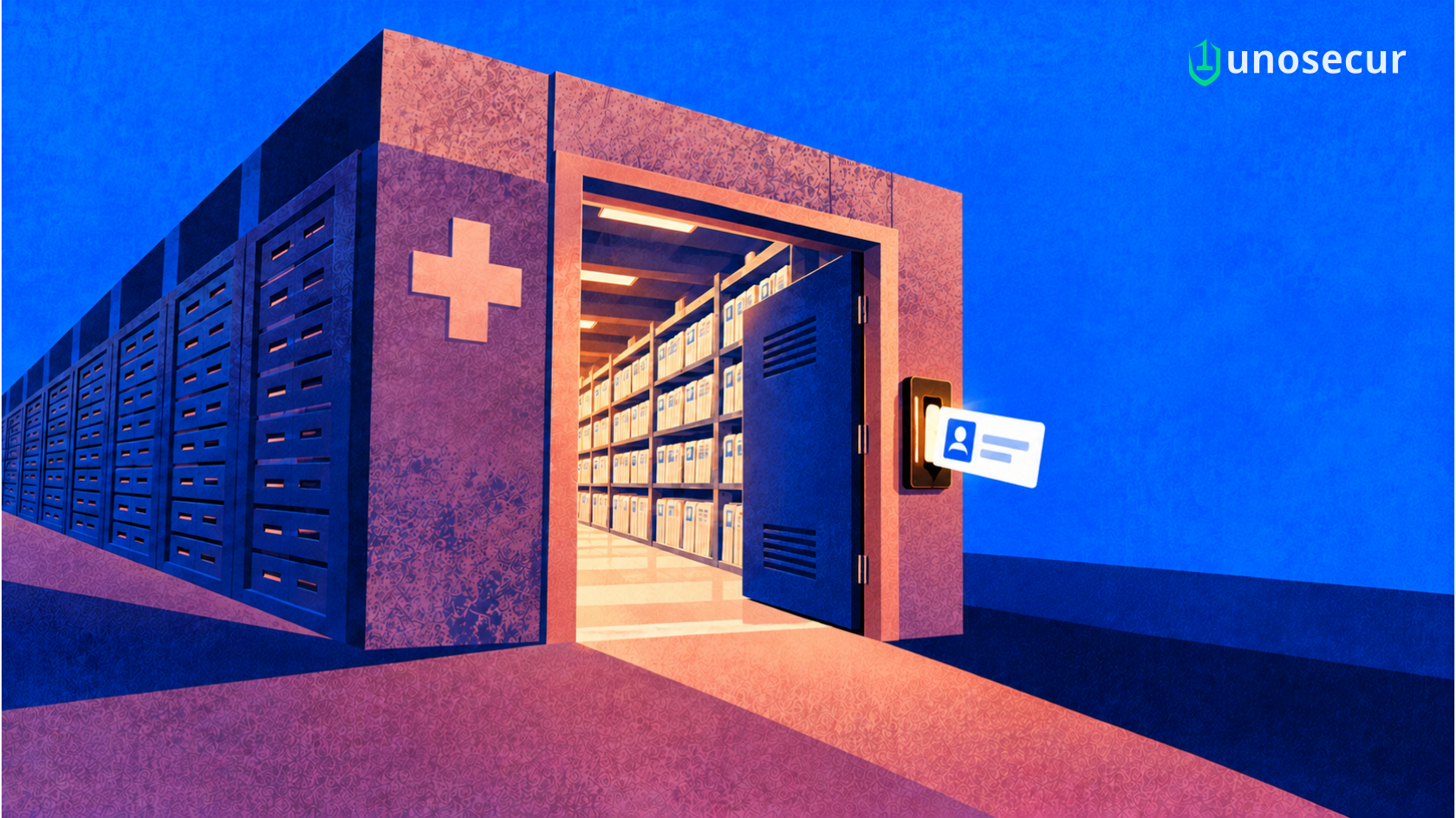
No malware. No ransomware. No zero-day. Just one attacker, a set of valid credentials.
That is reportedly all it took to expose the records of nearly 20 million patients across up to 80 U.S. hospitals in the 2026 Oracle Health (Cerner) breach. The lesson for every healthcare leader is uncomfortable but clear: this was not a malware problem. It was an identity problem.
What happened
According to CNET's reporting, an attacker using the alias "Andrew" logged into two legacy Cerner servers that had not yet been migrated to Oracle Cloud. Access began around January 22, 2026 and was discovered on March 7, 2026, with the breach window running to April 1 per the Oregon AG.
- Entry point: stolen credentials, mapped to MITRE ATT&CK T1078 (Valid Accounts)
- Technique: manual, hands-on-keyboard access; no malware or automation observed
- Dwell time: several weeks without detection
- Data taken: names, Social Security numbers, medical record numbers, diagnoses, medications, test results, medical images and physician names
- Impact: extortion demand, multiple class-action lawsuits, and notifications still reaching patients months later
Oracle states its own systems and Oracle Cloud were not affected. The exposure sat in infrastructure inherited through the 2022 Cerner acquisition.
Why this is an identity story
Every stage of this attack ran through an identity, and every stage was a missed chance to stop it.
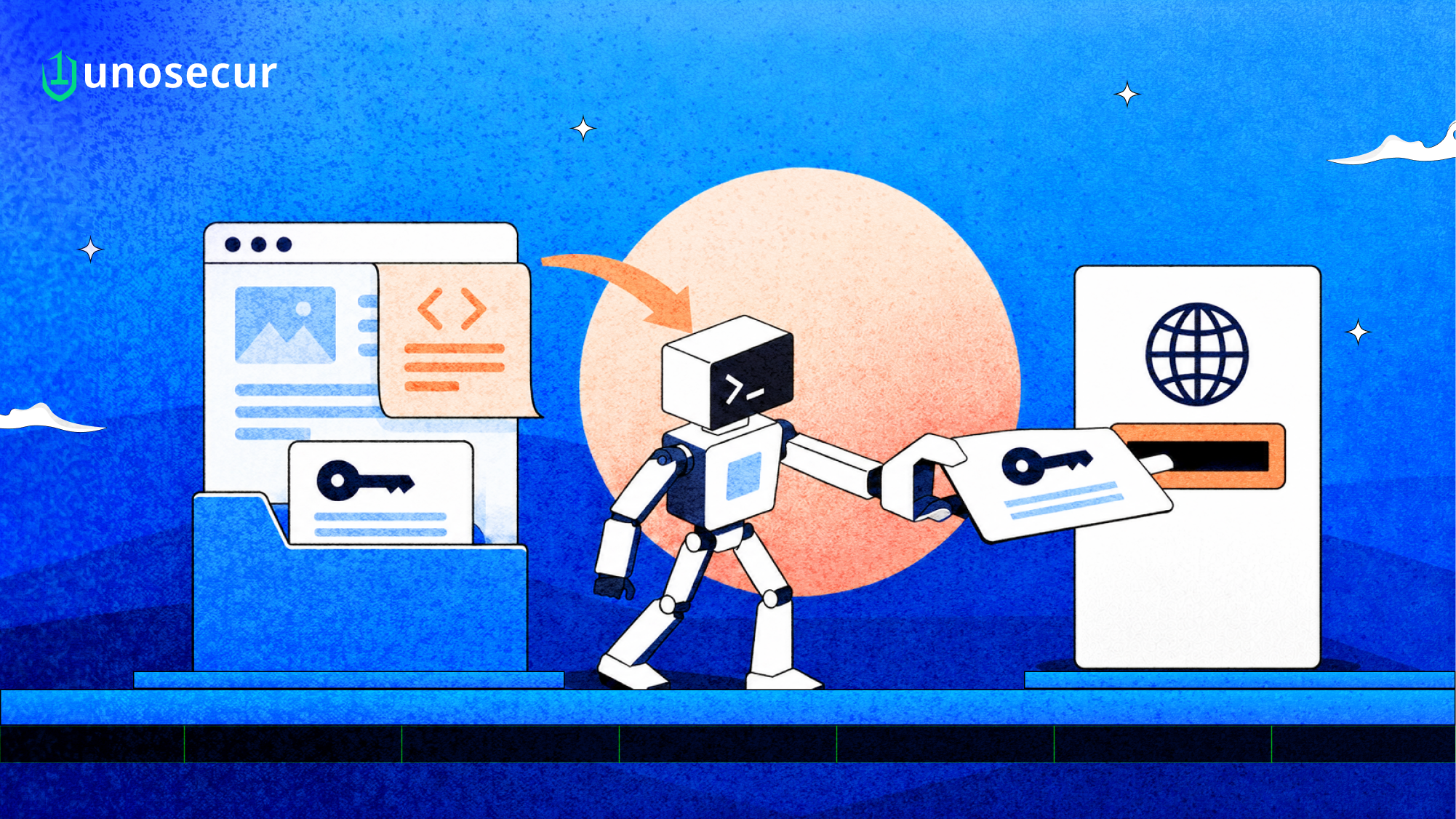
- A credential nobody was watching. Legacy systems from an acquisition often keep local, non-federated accounts outside the central IdP. They miss MFA rollouts, password resets and access reviews.
- A login that looked legitimate. Valid credentials produce valid logins. Perimeter and endpoint tools have nothing to flag when there is no malware.
- Weeks of quiet access. The attacker browsed and exfiltrated data for weeks. Nobody was baselining what "normal" looked like for those accounts.
- Access far beyond need. One identity could reach SSNs, diagnoses and imaging for millions of patients.
Healthcare makes this harder than most sectors: M&A-driven sprawl, shared clinical workstations, vendor and integration accounts, and a fast-growing population of service accounts, API keys and now AI agents.
Our point of view: break the chain at the identity layer
At Unosecur, we believe you cannot protect patient data without seeing and controlling every identity that can touch it, including the ones your IdP never knew about. Here is how the Unosecur Unified Identity Fabric maps to each stage of this attack.
For hospitals, this also means audit-ready evidence for HIPAA and other frameworks, without spreadsheets or manual access reviews.
Five questions every healthcare CISO should ask this week
- Do we have a complete inventory of identities on systems inherited through acquisitions?
- Which accounts with access to PHI are not covered by phishing-resistant MFA?
- How many service accounts, API keys and secrets have not been rotated in 90 days?
- Would we detect a valid account behaving abnormally within hours, not weeks?
- Who holds standing access to bulk patient data, and do they need it today?
If any answer is "we're not sure," that is where the next breach starts.
The bottom line
Attackers no longer break in. They log in. The Oracle Health breach shows that one unmonitored credential on one legacy server can put 20 million patients at risk.
Identity is now the perimeter, and it has to be secured continuously across every human, machine and AI agent. If you want to see your own identity blind spots, Unosecur can map them in minutes. Let's talk.
#IdentitySecurity #HealthcareCybersecurity #DataBreach #ITDR #ZeroTrust #HIPAA #NonHumanIdentities #Unosecur
Source: CNET, Oracle health care data breach

.png)
.webp)
%201.svg)

.webp)

.avif)
.webp)