.avif)



%201.svg)

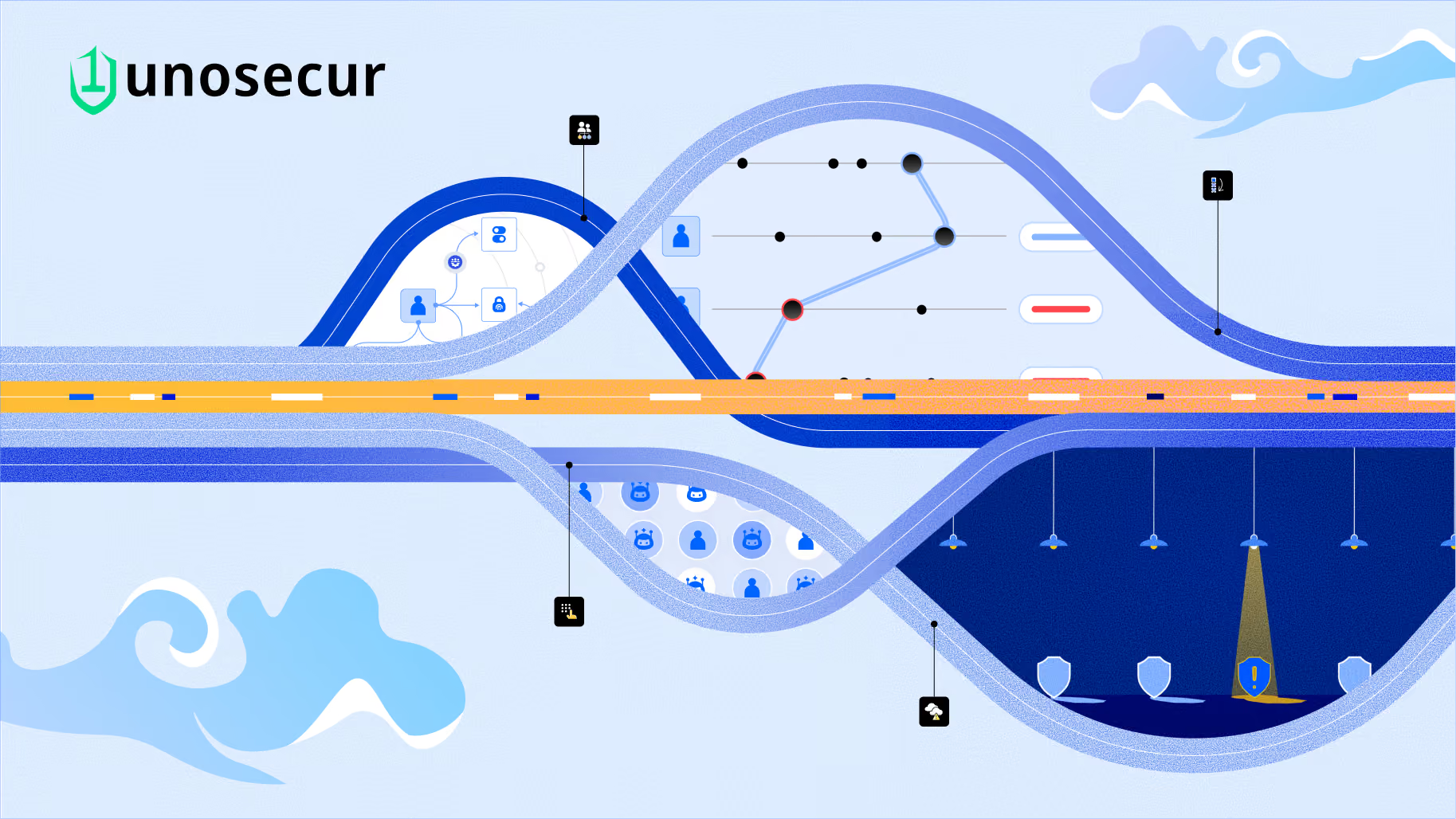
Identity is no longer just a login screen. It is a service account running at 2 AM. A Bedrock agent calling production APIs. A contractor who left six months ago but still holds active permissions. A non-human integration your team provisioned once and forgot. Modern infrastructure creates identities at a pace no IAM team can track manually, resulting in a fragmented, ungoverned surface that attackers move through while your tools are still generating reports.
Unosecur's Unified Identity Fabric (UIF) is an architecture designed to close that gap. It ingests identity data from every connected source, correlates it into a single graph, and provides security and IAM teams with continuous visibility, detection, and control in one place.
Here is what each module does and why it matters.
The Dashboard: Visibility before everything else
The core problem the UIF Dashboard solves is not a reporting problem. It is a visibility problem. Before you can detect risk or enforce least privilege, you need to know what exists. Most organizations do not.
Identities live in silos: cloud service providers, identity providers, SaaS applications, on-prem environments, and legacy apps, all maintaining their own records with no single place to see the full picture. The UIF Dashboard gives you that picture. Every identity, whether human, non-human, or AI agent, is mapped across all connected sources into a unified view. When a user exists across multiple systems, the Dashboard does not show three entries. It consolidates them into a single identity with full cross-source context. That correlation is the foundation on which everything else in the product is built.
Three identity categories that are typically invisible or underreported are surfaced here. Non-human identities, including service accounts, API keys, and OAuth tokens, make up a significant and often ungoverned portion of the identity surface. AI agents introduce a new and more urgent blind spot: agents provisioned into production systems that operate without guardrails, scoped permissions, or monitoring. And then there are human identities holding elevated access across multiple systems simultaneously, with no one connecting the dots.
The risk quantification layer sits atop this correlation graph. Instead of surfacing thousands of raw signals and leaving the analyst to sort out what matters, the platform compresses that signal space into a prioritized set of actionable risks through what we call the toxic combination engine: individual findings that are low-severity in isolation become high-priority when they occur together. A stale key is a finding. That same stale key, attached to an admin-privileged identity with no MFA and active in a critical production environment, becomes something that demands immediate attention.
The dashboard does not tell you what happened last quarter. It tells you what your identity surface looks like right now.
Risks: Where breaches get stopped before they start
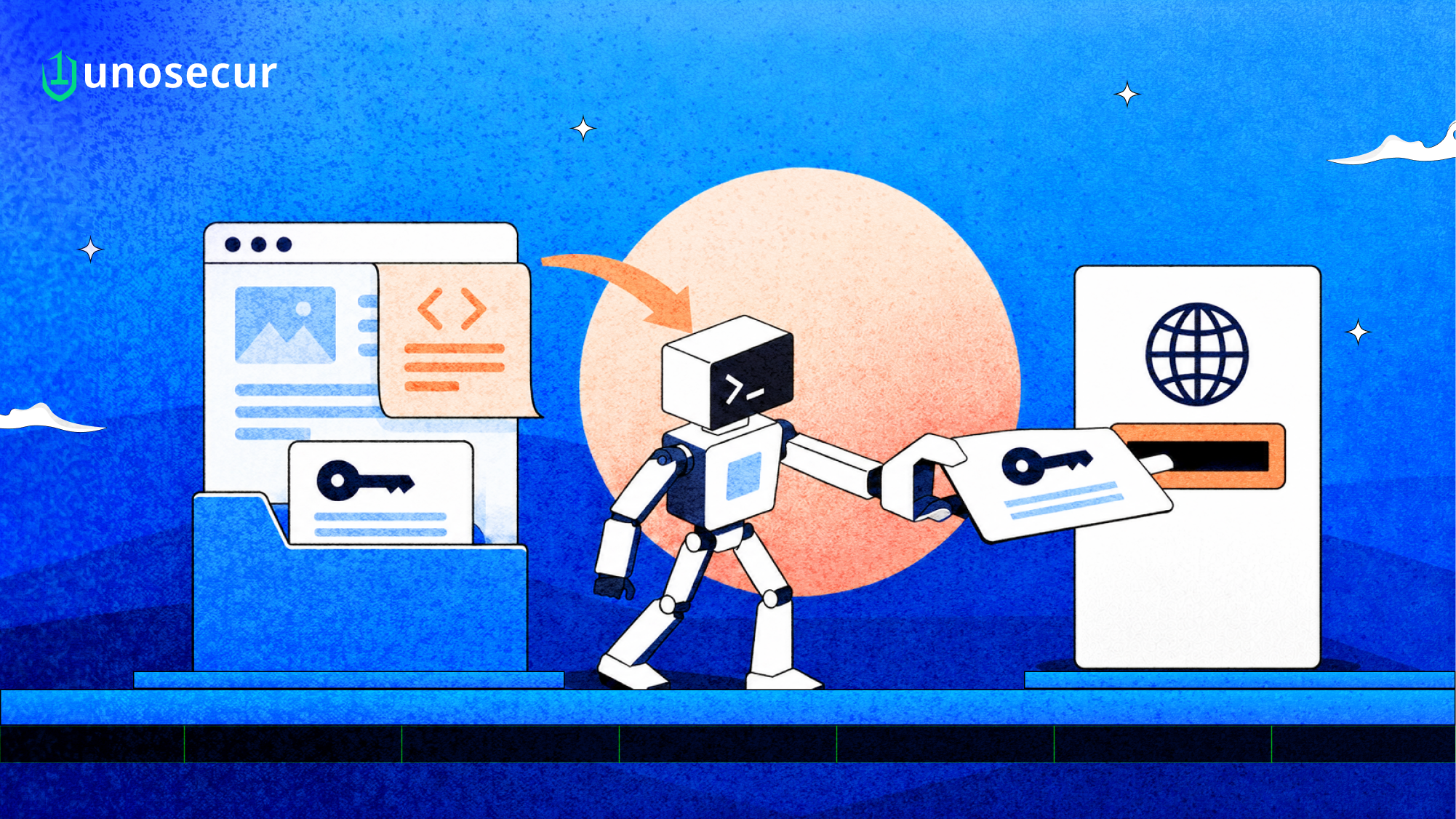
In March 2026, an extortion group known as FulcrumSec gained access to hundreds of private Novo Nordisk repositories. They did not use a zero-day. They used a credential, a GitHub personal access token sitting in client-side JavaScript, scoped to hundreds of private repositories, with more access than it should have had and no monitoring at all. By the time Novo Nordisk disclosed the incident on June 11, the group had been moving through the environment for more than two months, harvesting credentials the token exposed and reaching systems no one had connected to it.
The Risks module is where an attack like that gets interrupted. Every risk surfaced in UIF is not just a label. It is a breakdown of the issue, why it matters in context, and what to do about it, including remediation steps, a reference to the specific identity and source, and state tracking as teams work through their backlog. A long-lived, broadly scoped token with no expiry and no baseline for normal use does not stay buried in a report. It surfaces as a prioritized risk, tagged by environment and severity, with a clear remediation path attached.
FulcrumSec walked through a seam that was almost certainly visible in the identity data, had anyone been looking at the full picture: a machine credential with excess permissions, no expiry, and read access to hundreds of production repositories, treated as a configuration value rather than an identity. In Unosecur's fabric, that combination does not stay quiet. The toxic combination engine catches exactly this class of issue, not because any one signal is alarming but because the pattern is. This is not a static list of findings. It is an active workflow.
Insights and SaaS findings: Detection across every surface
Where "Risks" represent prioritized issues ready for action, Insights represent the continuous stream of findings the platform detects across your connected infrastructure, covering misconfigurations, overprivileged access, public exposure, and policy violations, all mapped to the specific source and identity they affect.
The Vercel breach is a useful illustration of what detection at this layer actually looks like in practice. No malware was used. An attacker compromised a third-party employee account, pivoted using an existing OAuth grant into Vercel's internal environments, and enumerated environment variables containing production secrets. Unosecur's detection rules would have fired at each stage, from the unusual OAuth consent pattern through to the first-ever access of a credential-holding variable.
We wrote about this in detail in our SaaS Findings launch, which covers how Unosecur detects identity threats across cloud, SaaS, and AI agents, with more than 25,000 unique detection scenarios and 100+ integrations. If detection coverage is where your program has gaps, that piece is worth reading first.
UIF Analyzer: The identity intelligence layer
The analyzer is where the correlation graph becomes interactive. It organizes the full identity surface into three categories: Correlated Users, Non-Human Identities, and AI Agents.
Correlated Users shows how identities connect across systems. Select any user and see every source they appear in, every permission they hold, and every risk associated with that identity profile. The cross-source view is the critical difference from querying each system individually.
The NHI view applies the same depth to service accounts, tokens, and non-human identities, with dedicated tabs that surface every permission in scope and map relationships between that identity and the resources it can reach.
The AI agents' view is where most organizations realize how large their blind spot actually is. At the infrastructure level, an AI agent looks identical to any other service account. It has a role, attached policies, and appears in the IAM inventory like everything else. Nothing about it indicates that it is calling a foundation model and acting autonomously on the output. But the blast radius of a compromised or misbehaving agent is not determined solely by the agent's permissions. It is determined by the permissions of every tool the agent invokes, the IAM roles associated with those tools, and the downstream services they can access.
Most organizations have a version of this exposure inside their own perimeter, not from external attackers but from their own agents. The AI agents view surfaces, each agent's events, permissions, accessible resources, and open findings in one place. We covered the full scope of AI agent discovery and governance in a dedicated piece. If you are running workloads on AWS, GCP, or Azure, it is worth understanding what your agents can actually reach before someone else does.
Ark AI: Natural language access to your identity graph
Security leaders are not slow because they lack information. They are slow because turning information into action still requires too many steps. Across a team managing thousands of identities and hundreds of alerts simultaneously, that overhead compounds.
Ark AI closes that gap. It is the conversational interface into the platform, and it does not just answer questions. It executes. Ask it to list all dormant service accounts with admin privileges, and it surfaces the filtered list in seconds. Ask it to right-size them, and it builds a step-by-step remediation plan for your approval before any changes are made.
Every execution is logged as an immutable audit record. For organizations operating under NIS2, DORA, SOC2, ISO 27001, GDPR, or PCI-DSS, every AI-driven action in the environment is fully documented, pre-approved, and auditable. And all inference runs on-prem, with no data leaving your network boundary.
Ark AI has its own dedicated piece if you want the full picture of what security operations at this speed actually look like in practice.
Timeline: A full audit trail across every source
Global incident response data from 2026 puts the average time from initial access to full data exfiltration at 72 minutes. That window is gone before most teams have finished their first investigation call.
The timeline does not change that window. But it eliminates the hours spent reconstructing a sequence of events that should have been visible from the start. Every identity event across all connected sources, permission changes, logins, policy updates, and configuration modifications is surfaced in a single filterable log in chronological order. When an incident happens, this is where you reconstruct exactly what changed and when, without chasing logs across six different systems.
Unified IAMOps: Governance without the manual overhead
IAMOps operationalizes the governance work that most teams defer because it is too manual. The module covers four capabilities:
- Just Enough Privileges, which right-sizes permissions to what is actually used.
- Just-in-time access, which allows temporary elevation with automatic expiry.
- No-Code Role Creation, which builds roles through a guided interface without writing policy JSON.
- Ticketing integration, which pushes actions into existing workflows.
Each capability reduces the gap between what your identities are authorized to do and what they actually need to do. That gap is not an abstract concern. It is the space where attackers and ungoverned agents operate.
Compliance: Continuous coverage, not point-in-time snapshots
The Compliance module maps your identity posture against major frameworks, including SOC 2, ISO 27001, CIS, and NIST. Instead of a point-in-time assessment, it maintains continuous control monitoring so you always know your current compliance state. Reports are exportable for audit purposes, collapsing what is typically a week-long exercise into a single export.
The attacker already knows where your gaps are
Every major identity incident of the past two years follows the same underlying logic. Someone, or something, had more access than they should have had in a system no one was watching for longer than anyone realized. The 8Base group did not need to be sophisticated. GTG-1002 did not need zero-days. The Copilot incident did not require a single line of malicious code. The Vercel breach did not touch a single endpoint. They all found the same thing: an identity that was provisioned but not governed, visible to no single tool, and accountable to no single team.
Every module in Unosecur’s Unified Identity Fabric operates on the same underlying data: a single, continuously updated graph of every identity, every permission, and every relationship across your infrastructure. You are not stitching together outputs from six different tools and hoping the picture they paint is complete. You are looking at one authoritative view and taking action from it.
Identity is where modern attacks begin. The question is whether you see the exposure first. Book a demo and see what your identity surface actually looks like across every source, every identity type, and every environment, in one place. See UIF in Action



.png)
%201.svg)




.webp)

.avif)
.webp)