





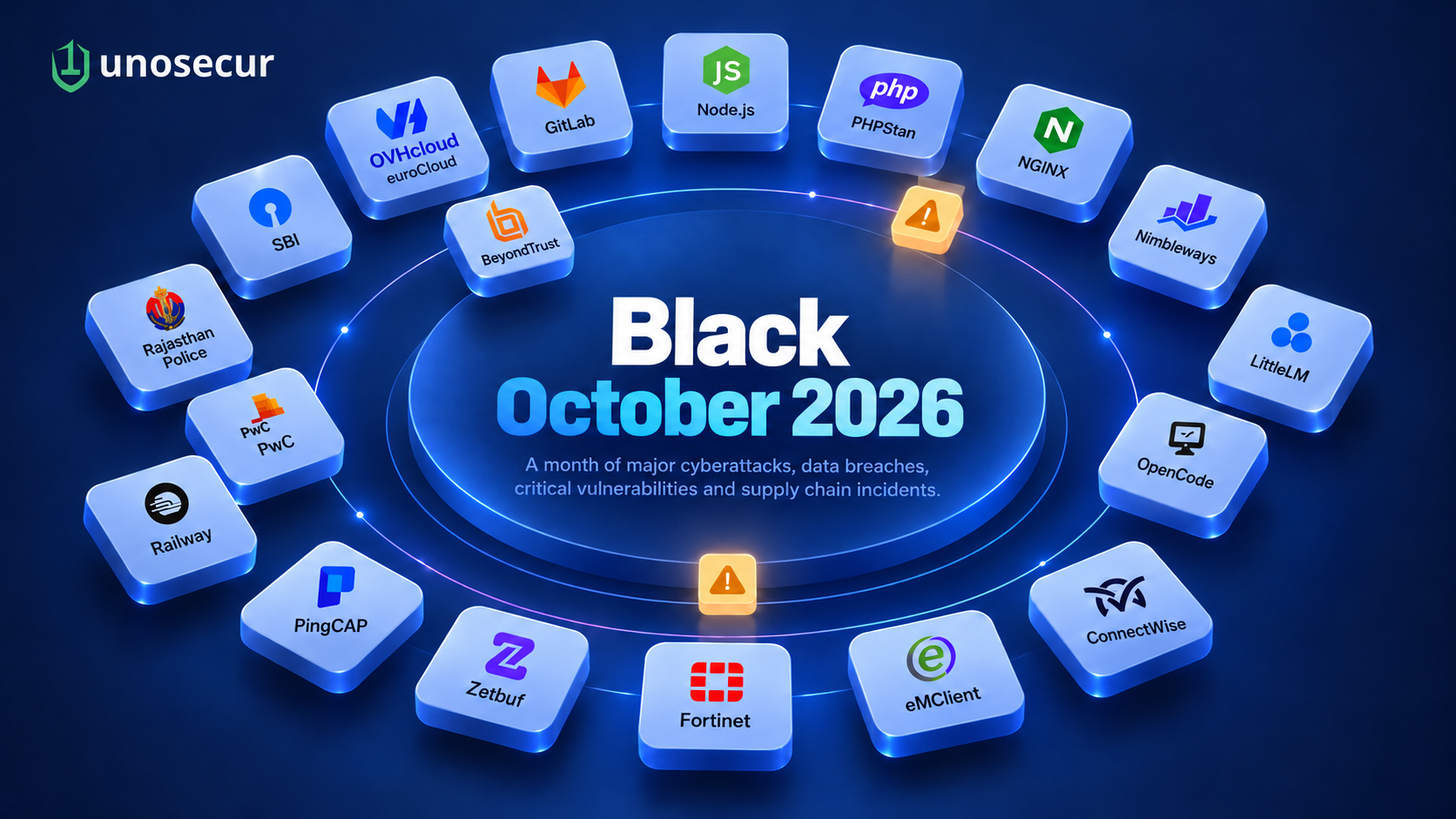
October 2026 may be remembered as “Black October” in cybersecurity, a period when major data breaches, critical vulnerabilities, compromised software updates, and exposed credentials dominated security headlines, sometimes within hours of one another.
Between October 20 and 22 alone, the cybersecurity community faced an extraordinary wave of disclosures. Critical PHP vulnerabilities threatened internet-facing applications, GitLab addressed a maximum-severity remote code execution flaw, LiteLLM distributed a malicious release capable of stealing credentials, and cloud platforms Railway and Zeabur disclosed incidents involving sensitive customer secrets.
And that was only part of the story.
Weak cryptographic keys at eMudhra raised concerns about digital certificate trust. Reports involving OpenCode, PwC, SBI, and other organizations highlighted risks to AI provider credentials, customer information, and third-party systems. Meanwhile, vulnerabilities in Node.js, Plex Media Server, and enterprise infrastructure demanded urgent attention from security teams.
In this report, Black October 2026 is a descriptive label for the concentration of disclosures, not the name of a verified coordinated campaign. The incidents vary in confirmation status, and a disclosure date does not necessarily indicate when an attack began.
However, those alarming numbers reflect an important distinction. Not every incident happened in October, and not every vulnerability resulted in a successful attack. Some compromises began weeks or months earlier and were only disclosed during October. Others involved newly discovered security flaws, active exploitation attempts, or allegations still under investigation.
What makes this period particularly significant is not just the number of incidents, but what they reveal about modern cyberattacks.
A compromised software dependency can steal credentials from an otherwise trusted application. A leaked cloud API key can expose systems far beyond the original breach. A vulnerable development platform can put CI/CD pipelines and production environments at risk. And long-standing weaknesses in widely deployed software can suddenly become urgent when researchers or attackers discover how to exploit them.
The common thread is the growing difficulty of securing identities, software dependencies, and access across interconnected environments.
In this Black October 2026 cybersecurity roundup, we examine the major incidents by category: data breaches, credential exposure, software supply chain attacks, critical vulnerabilities, active exploitation, and certificate security failures. Each section includes incident dates, technical explanations, timelines, reported impact, and practical lessons for organizations.
We also explore how security teams can reduce exposure to similar attacks through better identity visibility, least-privilege enforcement, credential protection, vulnerability management, and continuous monitoring.
Reporting cutoff: October 26, 2026. Summary tables use the latest relevant public disclosure or advisory date unless otherwise stated; incident timelines distinguish activity, detection, disclosure, and remediation. “Reported” and “alleged” do not mean independently confirmed.
1. Major data breaches and credential exposure incidents in October 2026
Cloud infrastructure, developer platforms, enterprise integrations, and third-party services were prominent in October's breach reporting.
A recurring concern was the exposure of credentials that could provide access beyond the initially compromised environment.
Environment variables, API keys, service account tokens, and cloud administrative credentials are especially sensitive because applications use them to authenticate automatically.
October 2026 data breach and credential exposure overview
1.1 Railway: Cloud infrastructure compromise exposed customer secrets
Key dates: October 20–22, 2026 (incident); October 22 (preliminary report)
Incident type: Unauthorized access and credential exposure
Status: Confirmed vendor disclosure
Railway's October security incident began with abnormal infrastructure activity and developed into an investigation involving internal access and customer secrets.
On October 20, Railway detected unusual activity affecting its infrastructure. During the investigation, engineers identified a sustained campaign targeting the platform.
Railway disabled build infrastructure as a precaution while investigating the attack.
The attacker nevertheless obtained access to a subset of internal systems.
Railway subsequently determined that encrypted customer secrets had been exposed. Some of those values were decrypted using credentials available to the attacker.
The company's preliminary investigation suggested that the attacker was particularly interested in AI provider API keys, potentially for unauthorized model distillation activity.
Railway incident timeline
- October 20, 13:58 UTC: Beginning of Railway's identified attack window.
- October 20, 19:53 UTC: Railway identified a sustained attack campaign.
- October 21: Railway disclosed possible access to encrypted environment variables and some decrypted secrets.
- October 21: Customers were advised to rotate potentially exposed credentials.
- October 22, 03:32 UTC: Railway confirmed the attacker no longer had access to internal systems.
- October 22: Preliminary incident report published.
Technical analysis
Cloud deployment platforms frequently store application secrets as environment variables.
These may include database passwords, cloud API keys, registry credentials, signing secrets, and AI provider tokens.
An attacker who gains access to these credentials may be able to authenticate to systems outside the original hosting platform.
For example, a stolen cloud key could potentially provide access to storage resources, while an exposed AI provider key could enable unauthorized API requests.
This creates a secondary risk: even after Railway removes the attacker from its infrastructure, stolen credentials may remain usable elsewhere.
Recommended response
Railway recommended that customers who registered before October 21 rotate keys stored on the platform.
Affected organizations should also review downstream service logs, revoke unused credentials, and investigate unexpected activity involving exposed identities.
Source: Railway preliminary incident report.
1.2 Zeabur: Long-lived credentials enabled access to cloud infrastructure
Key dates: October 14–15, 2026 (incident); October 19 (preliminary report)
Incident type: Cloud infrastructure and credential compromise
Status: Confirmed vendor disclosure
Zeabur's October incident demonstrated how leaked administrative credentials can provide attackers with access across multiple connected systems. According to the company's investigation, attackers used compromised internal credentials to access shared clusters, some dedicated servers, and internal infrastructure.
The attackers eventually reached the platform database and accessed customer environment variables, account information, and project data. The investigation also identified a failure to fully rotate credentials following an earlier August incident. That meant some credentials remained valid after the organization had already experienced a security compromise.
Zeabur incident timeline
- August 2026: Earlier security incident exposed weaknesses in credential protection.
- October 14: Attackers began using leaked internal credentials.
- October 14–15: Unauthorized access to cloud infrastructure and internal systems.
- October 15: Customer environment variables and platform information accessed.
- October 19: Zeabur published its preliminary investigation.
- October 20: Incident marked resolved on Zeabur's status page.
Technical analysis
Cloud administrative credentials can provide access to multiple resources through legitimate management interfaces. When such credentials are long-lived or excessively privileged, attackers may not need to exploit additional software vulnerabilities to move between systems. Zeabur's investigation illustrates the risks associated with incomplete credential rotation and insufficient separation of privileged access.
Recommended response
Zeabur advised affected customers to replace passwords and keys, including credentials that may have been rotated after its August incident. Organizations should review the privileges assigned to service identities, limit administrative access, and verify that credential rotation covers every relevant system.
Source: Zeabur October 2026 security incident report.
1.3 PingCAP / TiDB Cloud: Reported internal service account compromise
Key dates: September 9–October 7, 2026 (activity); October 7 (discovery); October 19 (report)
Incident type: Service account compromise
Status: Confirmed vendor disclosure; reported customer impact limited
October reporting described unauthorized activity involving an internal service account associated with PingCAP's TiDB Cloud environment. Service accounts are frequently used by applications, background processes, and infrastructure automation. Unlike human accounts, they often operate continuously without interactive authentication.
If attackers obtain their credentials, they may be able to access systems using legitimate authentication mechanisms.
Incident timeline
- September 9: Earliest reported unauthorized activity.
- October 7: Reported end of the identified activity window.
- October 19: Public security notification reported.
Technical significance
The incident illustrates the importance of service account inventory, credential rotation, and continuous monitoring. The precise customer impact and affected resources should be confirmed against PingCAP's official customer notifications before publication.
1.4 OpenCode Console: AI provider API keys reportedly exposed
Key dates: October 17, 2026, 00:30 UTC (earliest possible key exposure); October 17 (disclosure)
Incident type: AI provider credential exposure
Status: Confirmed breach; key use and full scope not established
OpenCode Console appeared in October reporting involving the exposure of stored AI provider credentials. The reportedly affected credentials included API keys associated with OpenAI, Anthropic, and Google. These keys may provide access to paid model endpoints, application workflows, and other connected services.
Unlike an interactive account login, API access often relies on possession of a valid credential. This means that a stolen key may remain usable until it is revoked, expires, or is restricted by another security control.
Incident timeline
- October 16–17: Reported unauthorized access and credential exposure.
- October 17: Public disclosure and remediation guidance reported.
Technical significance
AI development platforms can concentrate credentials from multiple model providers in one environment. That makes them attractive targets for attackers seeking to obtain access to several services through one compromise. Organizations should avoid unnecessarily broad API permissions, rotate affected keys, and review usage logs for suspicious requests. The exact technical root cause and affected-user count require confirmation from the original OpenCode disclosure.
1.5 ConnectWise Cloud Backup: Reported application credential compromise
Key dates: October 15–16, 2026 (observed activity); October 16 (initial advisory); October 25 (latest update)
Incident type: Cloud application identity compromise
Status: Confirmed vendor disclosure
ConnectWise Cloud Backup was associated with reports involving cloud application credentials used in connected Microsoft 365 environments. Application identities may receive OAuth permissions that allow them to access organizational data or perform administrative actions. If attackers obtain their credentials, they may be able to use the permissions already granted to those applications.
Incident timeline
- October 15: Suspicious activity involving application credentials reported.
- October 16: Incident disclosure reported.
- October 17: Cloud Backup-related services suspended as part of containment.
- October 19: ConnectWise completed a credential reset in the affected environment.
- October 25: Vendor advisory updated.
Technical significance
Compromised application identities can create risks that traditional user-account monitoring may overlook. Organizations should review vendor notifications, service principal permissions, application registrations, and suspicious API activity.
For the current status and partner guidance, see ConnectWise's official Cloud Backup advisory.
1.6 PwC: Third-party learning platform incident raises vendor security concerns
Key dates: October 22, 2026 (Everest claim); October 23 (PwC acknowledgment)
Incident type: Third-party data security incident
Status: Confirmed vendor acknowledgment; 590 GB is an unverified attacker claim
PwC appeared in October reporting concerning a security incident involving an external employee learning platform. The Everest extortion group reportedly claimed to have stolen approximately 590 GB of data. However, that figure should be treated as an attacker claim, not independently confirmed evidence of the amount stolen. PwC indicated that its core network and operations were not affected.
Incident timeline
- October 22: Everest group claimed to have stolen 590 GB of data.
- October 23: PwC acknowledged an incident involving an external employee learning platform and said core operations were unaffected.
Technical significance
A vendor compromise does not automatically mean that the customer's primary infrastructure has been breached. Nevertheless, external services may process employee information, identity data, and other sensitive records. Organizations need visibility into third-party data access, vendor permissions, and the information shared with external systems.
1.7 SBI: Reported customer information exposure on the dark web
Key dates: October 16, 2026 (bank alerted); October 21 (stock-exchange disclosure)
Incident type: Reported customer data exposure
Status: Bank-confirmed disclosure; source of records under investigation
Reports involving the State Bank of India described customer records appearing in a dark-web dataset.
SBI's preliminary disclosure concerned approximately 375,000 records, of which 3,897 were identified as containing personally identifiable information. The original source of the records remained under investigation. However, the presence of records in a leaked dataset does not automatically establish that attackers directly compromised the bank's core systems.
Incident timeline
- October 16: SBI received alerts about suspected data exposure.
- October 21: SBI disclosed the suspected exposure to stock exchanges; 3,897 records with PII identified in preliminary analysis.
- October 21 onward: Source and complete scope remained under investigation.
Technical significance
Exposed personal information may enable phishing, identity impersonation, and social engineering even when banking passwords are not involved. The article should not describe a direct SBI infrastructure breach as confirmed without authoritative evidence.
1.8 Rajasthan Police systems: Investigation into alleged identity-record exposure
Key dates: October 23, 2026 (investigation publicly reported)
Incident type: Alleged government data exposure
Status: Allegation under investigation; breach not established
October reporting also raised allegations involving a large collection of identity records associated with Rajasthan government systems. The reported exposure raised concerns about sensitive personal information and access to government databases. However, the origin, scale, and attribution remain insufficiently verified.
Incident timeline
- October 23: Public reporting described an investigation into allegations involving Rajasthan Police systems.
- As of October 26: Investigators had not established whether data was stolen or the extent of any exposure.
Technical significance
Government identity databases may contain information that could support fraud or impersonation if exposed. The incident should remain clearly labeled as alleged until supported by an official investigation or independently verified technical evidence.
2. Major software supply chain attacks in October 2026
Software supply chain attacks were among the most technically significant developments of Black October. Instead of targeting every downstream organization individually, attackers attempted to compromise the software and distribution mechanisms those organizations already trusted.
Once malicious code enters a legitimate package, container image, or release workflow, ordinary installation and deployment processes can become the delivery mechanism.
October 2026 software supply chain overview
2.1 LiteLLM 1.107.0: A compromised AI dependency became a credential stealer
Key dates: May 27, 2026 (credential exposed); October 10 (credential abuse); October 21 (malicious release); October 23 (investigation)
Incident type: Software supply chain compromise
Status: Confirmed vendor investigation
LiteLLM's October compromise demonstrated how an exposed credential can eventually undermine a trusted software release process. The attack began months before the malicious package appeared. On May 27, 2026, an internal master key was accidentally committed to a public repository. Although the exposed commit was corrected, the key was not revoked. On October 10, the attacker used that key to access an internal agent platform and retrieve a GitHub CLI OAuth token associated with an organization owner.
That token provided privileged repository access. The attacker subsequently obtained additional maintainer credentials and manipulated release workflows. On October 21, malicious LiteLLM 1.107.0 artifacts were published to PyPI and container registries.
LiteLLM attack timeline
- May 27: Internal master key exposed in a public repository.
- October 10: Attacker used the key to access an internal agent platform.
- October 10: Privileged GitHub credentials obtained.
- October 21: Release workflow manipulated.
- October 21, 11:39 UTC: Malicious PyPI packages published.
- October 21, 11:46 UTC: Malicious container images published.
- October 21, 13:23 UTC: Affected PyPI release removed.
- October 21, 14:20 UTC: Affected Docker Hub image references remediated.
- October 23: Canonical attack-chain investigation published.
How the attack worked
The compromise followed a chain of identity and software supply chain failures. First, an exposed master key provided access to an internal service. That service exposed a privileged GitHub token. The attacker used the token to obtain additional credentials and modify release infrastructure.
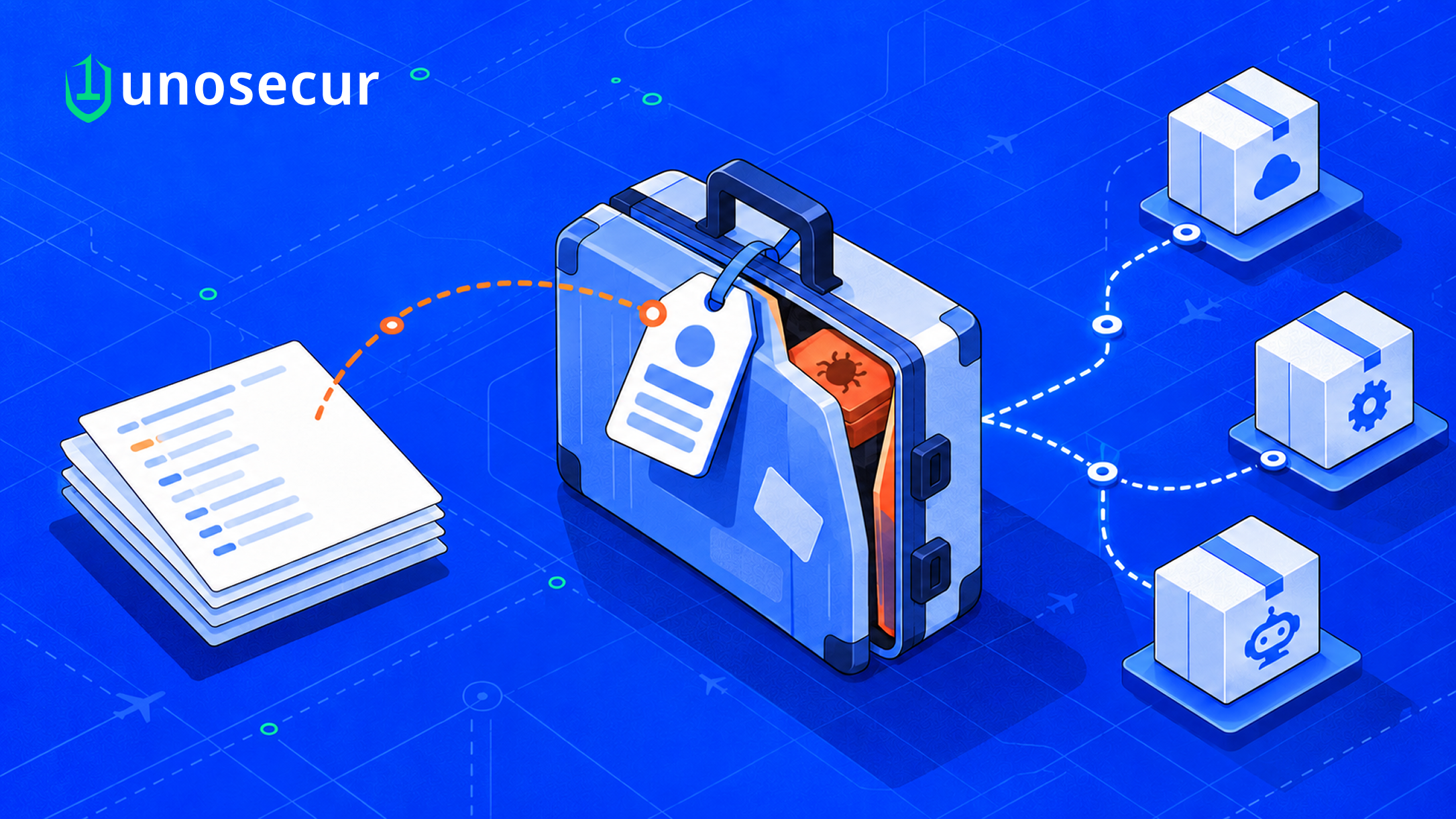
The malicious release was then distributed through legitimate package channels. The affected Python package contained malicious startup components that could execute when Python initialized, even without an application explicitly importing LiteLLM. The payload was designed to collect credentials accessible from the affected environment and load additional malicious code.
Why the attack was dangerous
The malicious package could expose credentials belonging to cloud infrastructure, developer tools, AI providers, and application services. That meant the impact could extend far beyond the original LiteLLM installation.
Recommended response
Organizations that installed or ran affected artifacts should follow LiteLLM's incident-specific instructions. The vendor recommended rebuilding affected environments and rotating potentially accessible credentials.
Simply reinstalling a clean package does not reverse credential theft. For the identity and release-token implications, read Unosecur's analysis of the LiteLLM credential attack path.
Source: LiteLLM's October 23 attack-chain investigation.
2.2 OVHcloud CLI: Malicious binaries in a trusted release channel
Key dates: October 19, 2026, 14:47–16:21 UTC+2 (malicious binaries available); October 20 (public advisory)
Incident type: Software distribution compromise
Status: Confirmed vendor security advisory
OVHcloud confirmed that malicious binaries were substituted into OVHcloud CLI release artifacts. Command-line utilities can operate inside privileged developer environments. They may have access to cloud credentials, local configuration files, environment variables, and authenticated sessions.
Incident timeline
- October 19, 14:47 UTC+2: Compromised OVHcloud CLI release binaries became available.
- October 19, 16:21 UTC+2: Malicious binaries removed from the release repository.
- October 20: OVHcloud published its GitHub security advisory.
Technical significance
A malicious executable downloaded from a trusted release page may run with the permissions of the user who launches it. Versions 0.11.0 through 0.15.0 were affected for users downloading binaries during the October 19 window; versions 0.10.0 and 0.16.0 were reported clean. Organizations should confirm downloaded artifact hashes and rotate potentially exposed secrets.
Affected users should verify downloaded artifacts and investigate possible credential exposure.
Source: OVHcloud CLI security advisory. See SANS NewsBites' October 23 incident summary for the reported release window.
2.3 Rank Math PRO: Reported WordPress plugin distribution compromise
Key dates: October 15, 2026, 20:02 UTC–October 16, 07:12 UTC (affected downloads)
Incident type: Plugin supply chain compromise
Status: Confirmed maintainer advisory
Reports involving Rank Math PRO described a potential compromise of plugin distribution. WordPress plugins execute inside the website's application environment. Malicious plugin code may therefore have access to application configuration, database credentials, and administrative functionality.
Incident timeline
- October 15, 20:02 UTC: Affected Rank Math PRO v3.0.123 downloads began.
- October 16, 07:12 UTC: Affected download window ended.
- After October 16: Rank Math released clean version 3.0.124 and remediation guidance.
Rank Math confirmed that some downloads of PRO v3.0.123 during the stated window contained malware. It released a clean v3.0.124 and advised potentially affected customers to follow its official incident guidance.
Administrators should verify installed software and investigate unexpected code changes where exposure is suspected.
3. Critical vulnerabilities and actively exploited security flaws in October 2026
October brought urgent vulnerability disclosures affecting programming runtimes, development platforms, remote access tools, and internet-facing services. Some flaws could allow unauthenticated remote code execution. Others involved certificate validation, memory corruption, or vulnerabilities that attackers could chain together.
It is important to distinguish the discovery of a vulnerability from evidence of active exploitation.
October 2026 critical vulnerability overview
3.1 PHP2Shell: Two critical PHP vulnerabilities exposed web applications to remote code execution
Key dates: August 19, 2026 (discovery); October 17 (observed attempt); October 21 (security release)
Incident type: Critical PHP remote code execution vulnerabilities
Status: Confirmed security releases; observed exploitation attempt is not a confirmed compromise
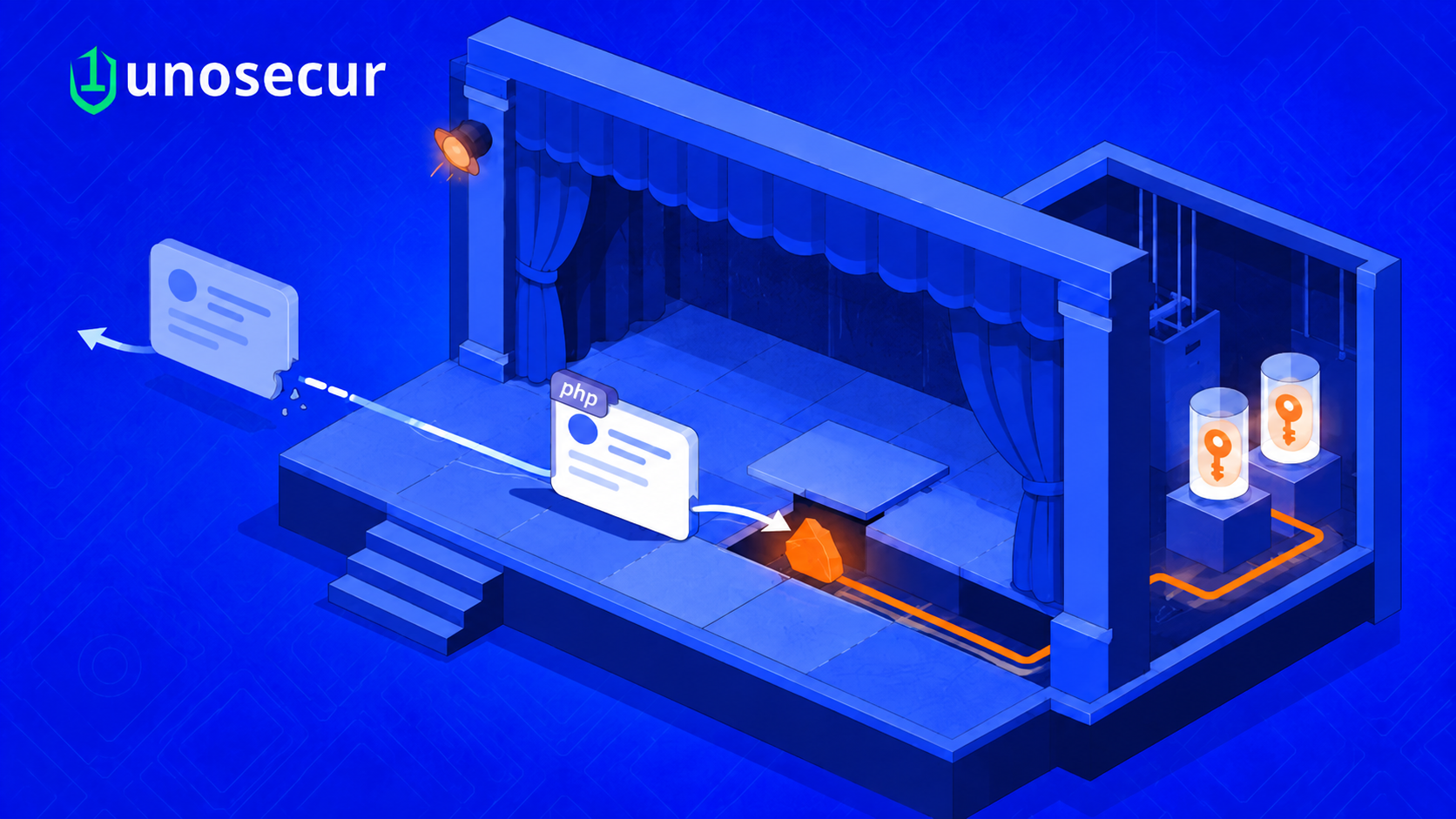
PHP2Shell refers to two critical memory-safety vulnerabilities in the PHP runtime. Unlike a vulnerability limited to a particular CMS or plugin, these weaknesses affect the underlying language runtime used by many web applications. The vulnerabilities involve memory-management failures during request processing and cleanup.
CVE-2026-109618 concerns incomplete internal state after memory allocation failure. CVE-2026-109619 involves internal request state remaining accessible after its backing memory has been freed. Under affected conditions, attackers can exploit these weaknesses to corrupt memory, access process data, or execute arbitrary code.
PHP2Shell timeline
- August 19: Researchers discovered the first vulnerability.
- August 20–21: Researchers demonstrated exploitation in test environments.
- August 24: Vulnerabilities reported to the PHP security team.
- September 21: Coordinated remediation progressed.
- October 17: An exploitation attempt was reportedly observed.
- October 20: PHP announced an upcoming critical security release.
- October 21: Security updates released.
- October 22–23: Additional remediation and monitoring guidance published.
Affected PHP versions and fixes
PHP 8.1 and earlier versions are outside the PHP project's upstream support lifecycle and did not receive upstream fixes. Organizations using vendor-supported distributions should check whether their operating system or hosting provider supplies backported security patches.
Technical impact
The vulnerabilities are especially concerning for internet-facing applications. Depending on the PHP execution model and application behavior, attackers may be able to trigger vulnerable code paths through crafted HTTP requests. Apache mod_php deployments were identified as particularly exposed in public research, although other PHP configurations also require assessment.
Recommended remediation
Upgrade affected runtimes, restart services, investigate suspicious requests, and review potential credential exposure. A patch prevents exploitation through the known vulnerability but does not automatically remove persistence or revoke credentials stolen before remediation.
Read in detail: Unosecur's PHP2Shell technical analysis covering the vulnerabilities, exploitation timeline, and remediation.
3.2 Node.js: Brotli RCE, TLS bypasses, DNS flaws, and certificate trust updates
Key dates: October 21, 2026 (security release)
Incident type: Multiple security vulnerabilities and certificate trust-store updates
Status: Confirmed project security advisory
Affected supported release lines: Node.js 22.x, 24.x, and 26.x
On October 21, the Node.js project released security updates addressing ten vulnerabilities across supported release lines.
The most significant involved a memory corruption flaw in the Brotli decoder.
Other vulnerabilities affected DNS resolution, TLS hostname validation, and HTTP behavior.
The same release also updated bundled certificate trust data following the eMudhra certificate incident.
Node.js security update timeline
- October 21: Node.js security releases published.
- October 21: Brotli decoder vulnerability patched.
- October 21: DNS and TLS hostname validation flaws addressed.
- October 21: Bundled certificate trust updated following the eMudhra incident.
- October 22 onward: Organizations began deploying fixed runtime versions.
Key Node.js vulnerabilities
How the Brotli vulnerability works
Brotli is a compression algorithm commonly used to reduce the size of transferred data. The vulnerability occurs when the decoder processes malformed compressed input and writes beyond the bounds of an internal buffer. An attacker who can cause a vulnerable application to decompress specially crafted Brotli data may be able to corrupt process memory.
The result could include a crash, sensitive memory disclosure, or potentially remote code execution. The risk is particularly relevant to applications that decompress untrusted data.
How the TLS and DNS flaws work
The DNS issue involves hostnames containing embedded NUL characters. An application might validate one hostname while the underlying resolver interprets another. The TLS issues involve inconsistent handling of unusual IP address representations. Under affected conditions, applications could incorrectly validate certificates or undermine hostname-based restrictions.
Connection to eMudhra
The security release also updated Node.js's certificate trust data following the compromise of eMudhra intermediate certificate authority keys. This was a certificate trust change, not an additional remote code execution vulnerability.
Fixed Node.js versions
Recommended remediation
Upgrade to the fixed runtime version for the relevant branch. Restart affected services and rebuild container images where necessary. Organizations should also check whether applications independently bundle vulnerable Brotli libraries.
Source: Node.js October 21 security release.
3.3 GitLab: Critical unauthenticated RCE vulnerabilities affected CI/CD infrastructure
Key dates: October 8, 2026 (first patch); October 13 (first CVE published); October 21 (second patch); October 22 (second CVE published)
Incident type: Critical remote code execution vulnerabilities
Status: Confirmed vendor patch advisories
GitLab appeared in October security reporting involving two critical vulnerabilities associated with regular expression compilation. The reported flaws could allow unauthenticated remote code execution under affected conditions. Development platforms are particularly sensitive because they often store source code, CI/CD credentials, deployment secrets, and integrations with production systems.
GitLab vulnerability timeline
- October 8: GitLab released patches for CVE-2026-97229.
- October 13: CVE-2026-97229 was published in the CVE database.
- October 21: GitLab released patches for CVE-2026-110264.
- October 22: CVE-2026-110264 was published in the CVE database.
Technical impact
A vulnerability in a CI/CD platform can create risks beyond the application itself. For example, if attackers compromise an environment containing deployment tokens, they may gain access to connected infrastructure.
GitLab confirmed that CVE-2026-110264 carried a CVSS 10.0 score and could allow unauthenticated code execution under certain conditions. See the GitLab October 21 critical patch advisory.
Source: GitLab October 21 patch release and CVE-2026-97229 record.
Recommended remediation
Update affected self-managed installations, review privileged accounts and pipeline permissions, and investigate suspicious administrative activity.
3.4 Plex2Shell: Chained vulnerabilities reportedly exploited to deploy malware
Key dates: October 16, 2026 (public exploit); October 19 (Plex update); October 20 (CISA KEV)
Incident type: Active exploitation and remote code execution
Status: Confirmed vendor advisory and exploitation reporting
Plex2Shell refers to a chain of four vulnerabilities affecting Plex Media Server. October reporting described attackers using the weaknesses against unpatched servers to execute unauthorized code and deploy malware.
The reported vulnerability chain includes:
- CVE-2026-96652
- CVE-2026-96654
- CVE-2026-96655
- CVE-2026-96656
When chained together, the flaws reportedly allowed attackers to obtain administrative access and execute code within the Plex server environment.
Plex2Shell timeline
- July 27: Vulnerabilities reportedly disclosed privately to Plex.
- October 16: Public technical analysis and proof-of-concept details released.
- October 17: Exploitation reportedly observed against a vulnerable honeypot.
- October 19: Widespread exploitation activity reported.
- October 20: CISA reportedly added the four vulnerabilities to its Known Exploited Vulnerabilities catalog.
- October 21: Additional reporting described malware deployment.
How the attack works
The Plex2Shell chain combines multiple application weaknesses. Attackers reportedly use the chain to reach internal functionality, obtain an administrative token, and place malicious code in a location accessible to the Plex application. The malicious component can then execute with the permissions of the Plex Media Server process.
This illustrates why vulnerability chaining matters. Several vulnerabilities that appear manageable individually may create a much more serious attack path when combined.
Reported malware activity
October reporting described attackers deploying cryptocurrency miners and unauthorized proxy software. Cryptocurrency miners consume system resources for the attacker's benefit. Proxy malware can allow attackers to route network traffic through a compromised system. Both activities indicate unauthorized control beyond the initial exploit.
Affected versions and remediation
Public reporting identified Plex Media Server 1.43.3.10861 as a fixed version. Administrators should use that release or a newer vendor-approved version, verify exposure, and investigate suspicious processes and files. Patching does not automatically remove malware already installed. Potentially compromised systems may require rebuilding and credential replacement.
Source: Plex2Shell exploitation reporting. See Plex's official security announcement.
3.5 BeyondTrust Remote Support: Privileged remote access infrastructure faced security risks
Key dates: October 9, 2026 (SaaS patch complete); October 15 (vendor advisory); October 16 (CISA KEV)
Incident type: Exploited remote access vulnerability
Status: Confirmed vendor and government advisories
BeyondTrust Remote Support appeared in October reporting involving zero-day exploitation and affected customer environments. Remote support systems are sensitive because they are designed to provide access to other systems. A compromise of this infrastructure may therefore create opportunities for unauthorized administrative activity.
Incident timeline
- October 9: BeyondTrust said the patch had been applied to all Remote Support SaaS customers.
- October 15: BeyondTrust published advisory BT26-05 for CVE-2026-102764.
- October 16: CISA added the vulnerability to its Known Exploited Vulnerabilities catalog.
Technical significance
Organizations should prioritize vendor remediation, review privileged remote sessions, and investigate suspicious access activity.
BeyondTrust's BT26-05 advisory identifies CVE-2026-102764 as an improper origin-validation flaw in an internal messaging component. Self-hosted customers should follow the BeyondTrust BT26-05 advisory for patch instructions.
3.6 Why are years-old vulnerabilities still being exploited in 2026?
One of the most important lessons from Black October is that a software weakness may exist for years before researchers discover it. PHP2Shell illustrates this distinction. The underlying memory-management problems existed in older PHP code, but the vulnerabilities were only publicly disclosed and patched in October 2026. That does not mean attackers had been exploiting the same flaws for years.
The age of a bug, its discovery date, its public disclosure date, and the beginning of observed exploitation are different events.
Why older vulnerabilities remain dangerous
First, organizations may continue running legacy software because upgrades require extensive testing or compatibility changes.
Second, complex software can contain weaknesses that remain undiscovered for years.
Third, attackers may combine multiple vulnerabilities to create a more serious attack path.
Fourth, public exploit details can accelerate scanning and exploitation against unpatched systems.
Finally, unsupported software may no longer receive security fixes from its original maintainers.
What should organizations do?
Maintain an accurate software inventory, identify unsupported components, apply vendor fixes, and prioritize vulnerabilities based on exposure and exploitation evidence. Security teams should also understand what privileges a vulnerable application possesses.
The key lesson: A vulnerability does not become harmless because it is old. Its risk depends on exploitability, exposure, available patches, and the access an attacker can obtain.
4. Certificate authority and digital trust incidents in October 2026
Not every cybersecurity incident involves stolen data or malicious software.
Some failures affect the infrastructure that allows browsers and applications to determine whether a digital identity can be trusted.
October's eMudhra incident demonstrated the consequences of weak cryptographic key generation.
October 2026 certificate security overview
4.1 eMudhra: Extremely weak certificate keys threatened digital trust
Key dates: October 17, 2026 (researcher report); October 21 (CERT-In advisory); October 26 (vendor update)
Incident type: Cryptographic key-generation weakness
Status: Confirmed advisories; no confirmed compromise of customer data
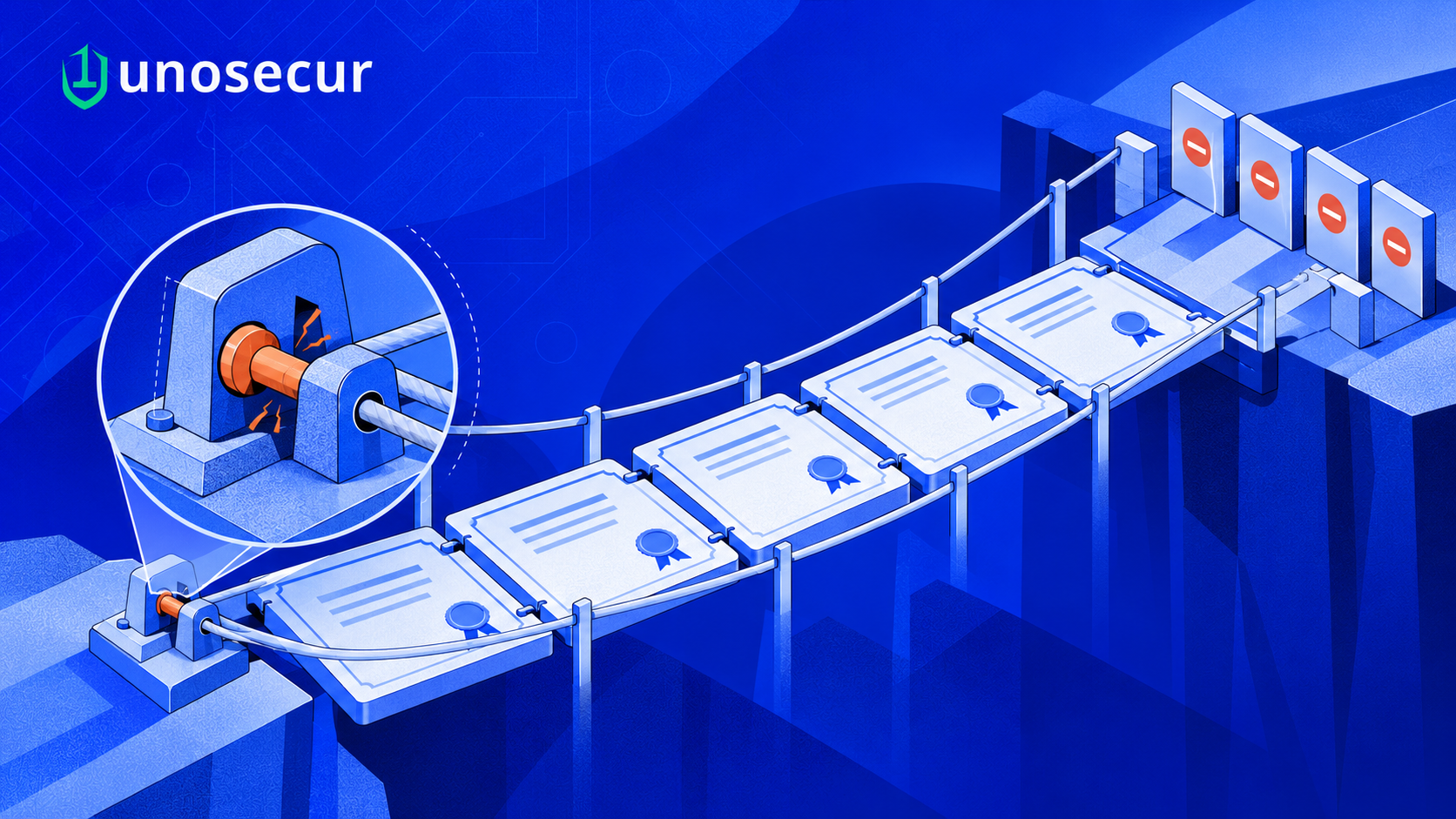
The eMudhra incident exposed a serious failure involving private keys used by intermediate certificate authorities. According to CERT-In, the affected P-384 elliptic-curve private keys had values smaller than 256. In one widely discussed example, a private key reportedly had the value 4.
For comparison, properly generated P-384 private keys should be selected from an extremely large range of possible values. A key chosen from only a few hundred possibilities can be recovered by testing those possibilities against the corresponding public key. This undermines the security assumptions on which certificate-based trust depends.
eMudhra incident timeline
- October 17: Researcher reported weak keys associated with eight intermediate CAs.
- October 17: Chrome deployed protective certificate-blocking measures.
- October 18: eMudhra revoked the affected intermediate certificates.
- October 20: Google published its incident response explanation.
- October 21: CERT-In published its advisory.
- October 26: eMudhra updated its public statement and acknowledged a script error.
Why the weakness was serious
Certificate authorities are trusted to issue certificates that allow software to authenticate websites and other services. If an attacker recovers an intermediate CA private key, they may be able to generate fraudulent certificates within that authority's trust scope. Clients that continue trusting the compromised authority could potentially accept those certificates.
What was actually affected?
eMudhra's October 26 statement said the affected intermediate CAs had not issued publicly trusted end-entity certificates. The company also stated that there had been no compromise of its infrastructure or customer data. Its separate regulated digital-signature and eSign services were not affected. These distinctions matter because weak CA keys do not automatically establish that attackers successfully impersonated websites or stole customer information.
Recommended response
Organizations should apply browser and trust-store updates, review certificate chains where relevant, and follow guidance from affected certificate authorities.
Sources: Google Security Blog, CERT-In, and eMudhra's official incident statement.
5. What Black October 2026 reveals about modern cyberattacks
Although the incidents involved different technologies, several recurring security weaknesses appeared.
5.1 Compromised credentials can expand an attack beyond its original entry point
Railway, Zeabur, and LiteLLM demonstrated how stolen credentials can create access to systems that were not directly involved in the original compromise.
An attacker may use a cloud key, service token, or deployment credential to authenticate to connected infrastructure. For a related example, see Unosecur's analysis of identity-related breaches in Japan.
5.2 Non-human identities are attractive attack targets
API keys, service accounts, workload identities, CI/CD tokens, and AI agent credentials are essential to modern applications.
However, they may have broad permissions, long lifetimes, and limited monitoring.
When compromised, they can allow attackers to act through legitimate access mechanisms.
5.3 Trusted software distribution channels can become attack paths
The LiteLLM compromise demonstrated that official package registries do not eliminate supply chain risk.
Software provenance, protected release workflows, restricted publishing permissions, and artifact verification remain essential.
5.4 Critical vulnerabilities require exposure-based prioritization
A vulnerability's severity score is important, but it does not tell the entire story.
Organizations must also consider internet exposure, exploitability, affected versions, privileges, and evidence of active exploitation.
5.5 Credential rotation must cover every potentially exposed system
Zeabur's investigation showed how incomplete credential rotation can leave organizations exposed after an earlier incident.
Effective recovery requires identifying every affected credential and reviewing what it can access.
5.6 Third-party platforms expand the security perimeter
Organizations increasingly depend on external platforms for development, cloud infrastructure, employee services, and AI integrations.
Security teams need visibility into what data those services hold and which identities can access it.
6. How can organizations reduce exposure to similar cyberattacks?
Black October highlights the importance of combining vulnerability management, software integrity, credential protection, identity security, and incident response.
No single security product prevents every category of attack described in this report.
However, several controls can reduce the likelihood or impact of identity-related compromise.
6.1 Discover human, non-human, and AI agent identities
Organizations should maintain visibility into employees, administrators, service accounts, API keys, workload identities, and AI agents.
An incomplete identity inventory makes it difficult to determine which credentials may have been exposed or what systems attackers could reach.
How Unosecur can help
Unosecur's unified identity security platform is designed to provide visibility into human, non-human, and AI agent identities across connected enterprise environments.
This can help security teams identify risky access relationships and excessive permissions in supported systems. For a cloud-specific example, see Unosecur's Oracle Cloud Infrastructure identity security guide.
6.2 Enforce least privilege across cloud and enterprise systems
The LiteLLM and Zeabur incidents illustrate the consequences of credentials with extensive access.
Organizations should restrict administrative permissions, reduce standing privileges, and review service account access regularly.
How Unosecur can help
Unosecur focuses on least-privilege enforcement and identity access controls.
These capabilities can help limit the potential impact of compromised identities where supported.
6.3 Monitor suspicious identity activity at runtime
An attacker using stolen credentials may appear to be a legitimate application or account.
Security teams should investigate unusual API calls, unexpected privilege use, unfamiliar access patterns, and deviations from normal identity behavior.
How Unosecur can help
Unosecur's runtime identity visibility and threat response capabilities are designed to help organizations detect and respond to suspicious identity activity across integrated environments.
6.4 Protect CI/CD pipelines and software release workflows
Organizations should secure repository credentials, restrict release permissions, require protected approvals, and verify software artifacts. The LiteLLM incident shows why development identities need strong access controls. Unosecur's identity-focused capabilities may complement CI/CD protections in supported environments. However, release signing, dependency scanning, secure builds, and artifact verification remain separate essential controls.
6.5 Prioritize and patch exploitable vulnerabilities
Organizations should identify affected software versions, assess internet exposure, and deploy relevant vendor patches. PHP2Shell, Node.js, GitLab, and Plex2Shell require product-specific remediation. Identity security tools do not replace software patching.
6.6 Prepare for credential compromise
Organizations should maintain tested procedures for revoking API keys, rotating service credentials, rebuilding affected workloads, and investigating downstream access. Unosecur's identity incident response runbook offers a practical workflow for containment and recovery.
How Unosecur can help
Identity discovery, access visibility, least-privilege enforcement, and runtime monitoring can support investigations into compromised identities. Actual credential revocation and rotation depend on the connected systems and available integrations.
Conclusion
Black October 2026 was not one cyberattack. It was a concentration of incidents that exposed weaknesses across cloud infrastructure, software development, identity management, and digital trust.
The LiteLLM compromise showed how one exposed credential could eventually undermine a trusted software release pipeline. Railway and Zeabur demonstrated how unauthorized infrastructure access can place customer secrets at risk. PHP2Shell, Node.js, GitLab, and Plex2Shell reminded organizations that vulnerabilities in widely used software can demand immediate action.
And eMudhra revealed how weak cryptographic key generation can threaten the trust mechanisms behind secure communication. The incidents differed in cause and impact, but they shared one important lesson:
Security failures rarely remain confined to the system where they begin.
A compromised identity can extend an attack into connected infrastructure. A malicious dependency can expose credentials from its host environment. An unpatched application can become an entry point for further compromise. Organizations need to protect not only applications and infrastructure, but also the identities and permissions connecting them.
That requires timely patching, secure software delivery, strong credential management, least-privilege access, and continuous monitoring.
As enterprises deploy more AI agents and automated workloads, understanding who or what can access sensitive systems will become an increasingly important part of cybersecurity.
Frequently asked questions
What is Black October 2026 in cybersecurity?
Black October 2026 is an informal term describing a concentration of high-profile cybersecurity incidents and disclosures during October, particularly between October 17 and 22. These included cloud security incidents, supply chain compromises, critical vulnerabilities, and certificate security failures.
What were the biggest cybersecurity incidents in October 2026?
Notable incidents included the LiteLLM supply chain compromise, Railway and Zeabur cloud security incidents, PHP2Shell vulnerabilities, Node.js security updates, critical GitLab flaws, reported Plex2Shell exploitation, and the eMudhra certificate security incident.
Which companies reported data breaches in October 2026?
Railway and Zeabur disclosed unauthorized access involving cloud infrastructure and customer secrets. Additional reporting involved OpenCode, PingCAP, ConnectWise, PwC, and SBI, although the confirmation status and reported impact differ between cases.
What were the biggest cybersecurity incidents in India in October 2026?
Notable India-related developments included the eMudhra certificate security incident and reported customer data exposure involving SBI. Allegations concerning Rajasthan government identity records also circulated, but their source and scope require independent verification.
What were the biggest cybersecurity incidents in the United States in October 2026?
US organizations and users faced risks from software supply chain incidents, critical vulnerabilities, and cloud security disclosures affecting globally used technologies. A definitive list of the largest US-specific breaches requires country-level incident verification.
What were the biggest cybersecurity incidents in Europe in October 2026?
European organizations faced exposure to major software vulnerabilities, including PHP2Shell and Node.js security issues, as well as risks from globally used cloud and developer platforms. Exposure to a vulnerability does not necessarily establish a successful breach.
Which countries were most affected by cyberattacks in October 2026?
Available public incident reporting does not establish a reliable worldwide ranking. Countries differ in disclosure requirements, incident reporting practices, and the visibility of affected organizations.
What were the most critical vulnerabilities disclosed in October 2026?
Major disclosures included PHP2Shell, Node.js Brotli decoder vulnerabilities, reported GitLab unauthenticated remote code execution flaws, and vulnerabilities affecting Plex Media Server and enterprise infrastructure.
Which October 2026 vulnerabilities were actively exploited?
Reporting described exploitation attempts involving PHP2Shell and active exploitation against vulnerable Plex Media Server installations. The evidence and confirmed impact differ between incidents.
Why were years-old vulnerabilities still affecting organizations in October 2026?
Some vulnerabilities originated in software weaknesses that had existed for years but were only recently discovered. Others remained exploitable because organizations had not installed available patches. The age of a software bug should not be confused with the date it was disclosed or first exploited.
Which October 2026 vulnerabilities posed remote code execution risks?
Major examples included PHP2Shell, the Node.js Brotli decoder flaw, reported critical GitLab vulnerabilities, and the Plex2Shell vulnerability chain. Exploitation conditions varied by product and configuration.
What were the biggest software supply chain attacks in October 2026?
The LiteLLM 1.107.0 compromise was particularly significant because attackers distributed malicious artifacts through official package and container registries. Other reported incidents involved software release binaries and third-party packages.
Why were API keys frequently targeted in October cyberattacks?
API keys can provide programmatic access to cloud services, databases, AI providers, and enterprise applications. If stolen, they may enable unauthorized activity without requiring an interactive user login.
What role did non-human identities play in October 2026 cyberattacks?
Several incidents involved API keys, service credentials, automation tokens, and privileged development identities. These credentials can expand an attacker's reach when exposed or excessively privileged.
How can organizations protect themselves against similar cyberattacks?
Organizations should patch vulnerable software, protect software release pipelines, rotate exposed credentials, enforce least privilege, monitor suspicious identity activity, and maintain tested incident response procedures.
How can Unosecur help reduce identity-related cyber risks?
Unosecur focuses on visibility, least-privilege enforcement, runtime monitoring, and threat response for human, non-human, and AI agent identities. These capabilities can help reduce identity-related exposure in supported environments and complement vulnerability management, software supply chain security, and incident response.