





October is exposing weaknesses in the software we run, the platforms holding our secrets, and the authorities our systems trust. Enterprises need to understand how far those failures can reach, wherever the technology is operated.
A dependency failure should have a limit. Yet organizations responding to October’s incidents are often having to discover that limit during the investigation.
They must establish which software ran, which credentials were accessible, which data was exposed, and which trust relationships need to be withdrawn. Repairing the original weakness doesn't answer those questions.
We should question why so much of this has to be discovered under incident pressure.
“Black October” brings together vulnerabilities, breaches, outages, and research disclosures. Some attacks began before October; some findings concern vulnerabilities or attempted attacks rather than confirmed breaches. The concentration does not prove a single campaign or an unprecedented month.
It does expose a wider problem: organizations depend on software, platforms, and trust infrastructure whose failure can demand action across systems they manage separately..
This tolerance has become too expensive. Security reviews should demand evidence that a dependency’s failure can be contained. Confidence in the supplier cannot substitute for control over the access we give it.
What makes October consequential
The incidents deserve precision before interpretation.
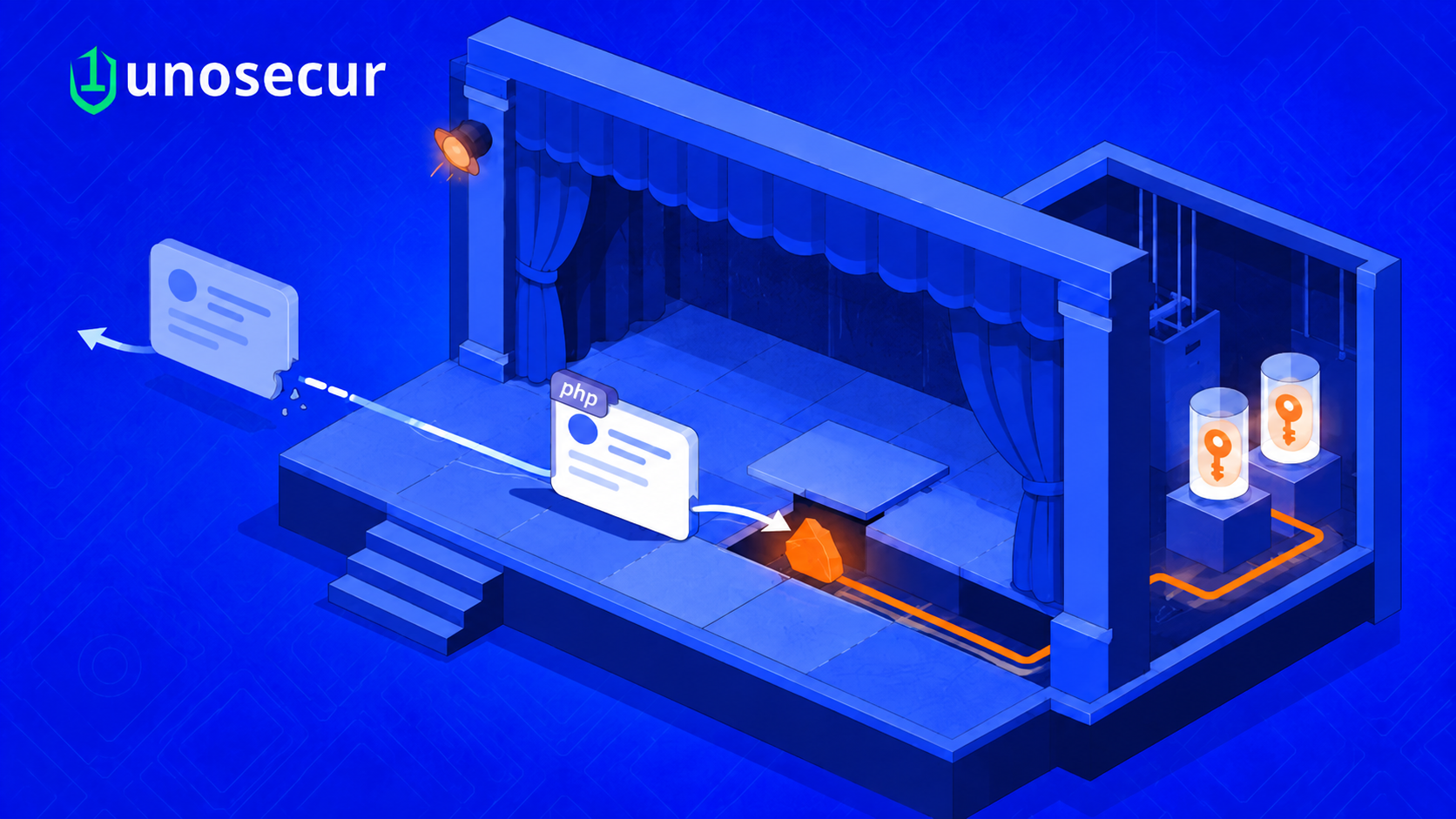
PHP2Shell concerns vulnerabilities that can enable unauthenticated remote code execution in affected PHP deployments. The weakness sits in the runtime beneath applications. Exploitation attempts were observed before patches became available on October 21.
A vulnerable installation is not proof of a successful breach. However, exposed organizations cannot rely on patch completion alone to prove nothing happened beforehand. Where exposure or suspicious activity warrants investigation, responders must examine what the affected process could access.
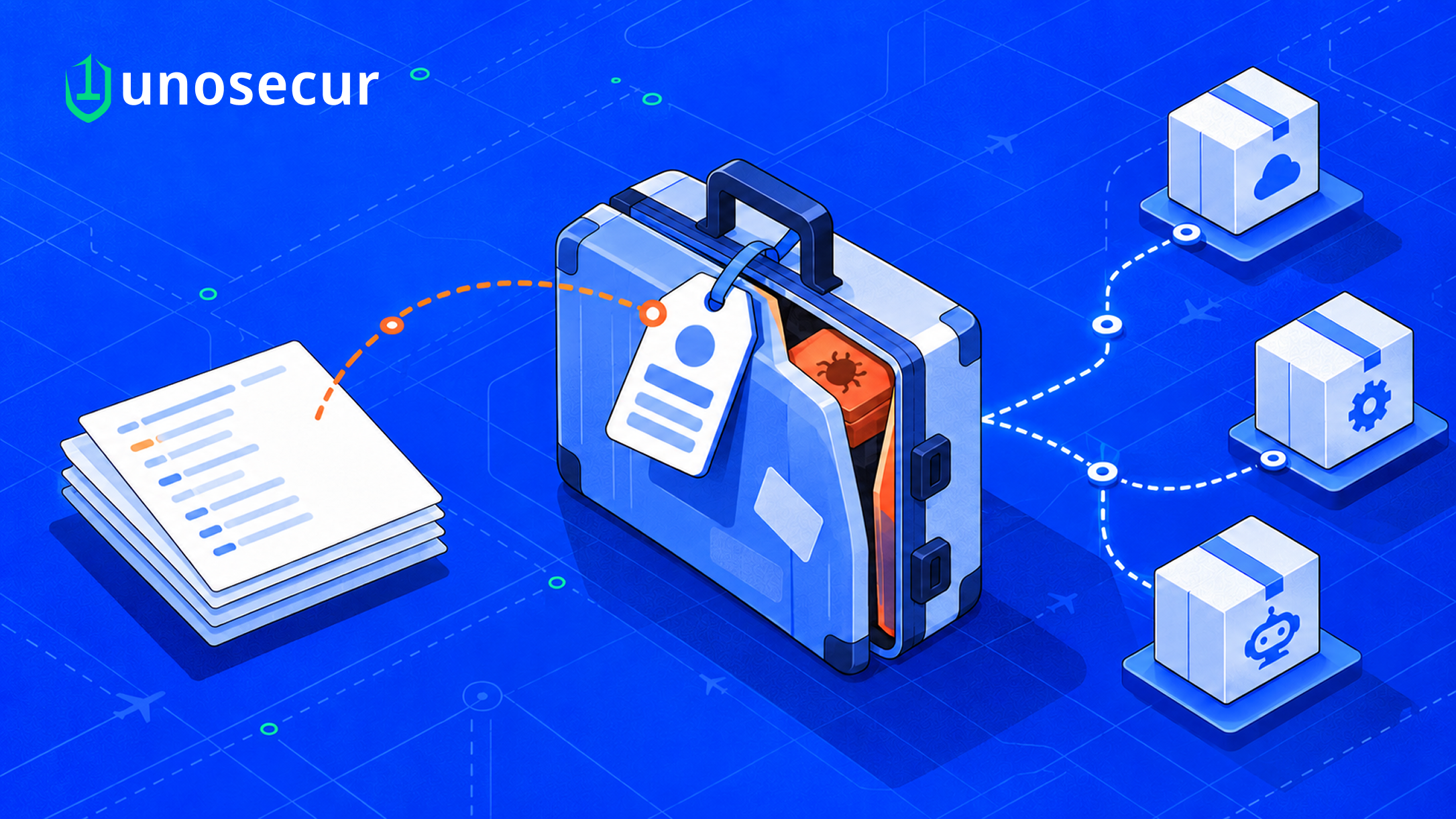
The LiteLLM incident involved a malicious release distributed through package and container channels on October 21. Its payload collected credentials from affected environments. Organizations that ran the compromised artifacts need to investigate the secrets available there; removing the package cannot invalidate credentials already copied.
Railway’s disclosure raises concerns about possible unauthorized access to stored customer environment variables, including decrypted values for some. These could contain API keys, database credentials, and registry credentials. The company advised customers to rotate them and examine activity in the corresponding services while its investigation continued.
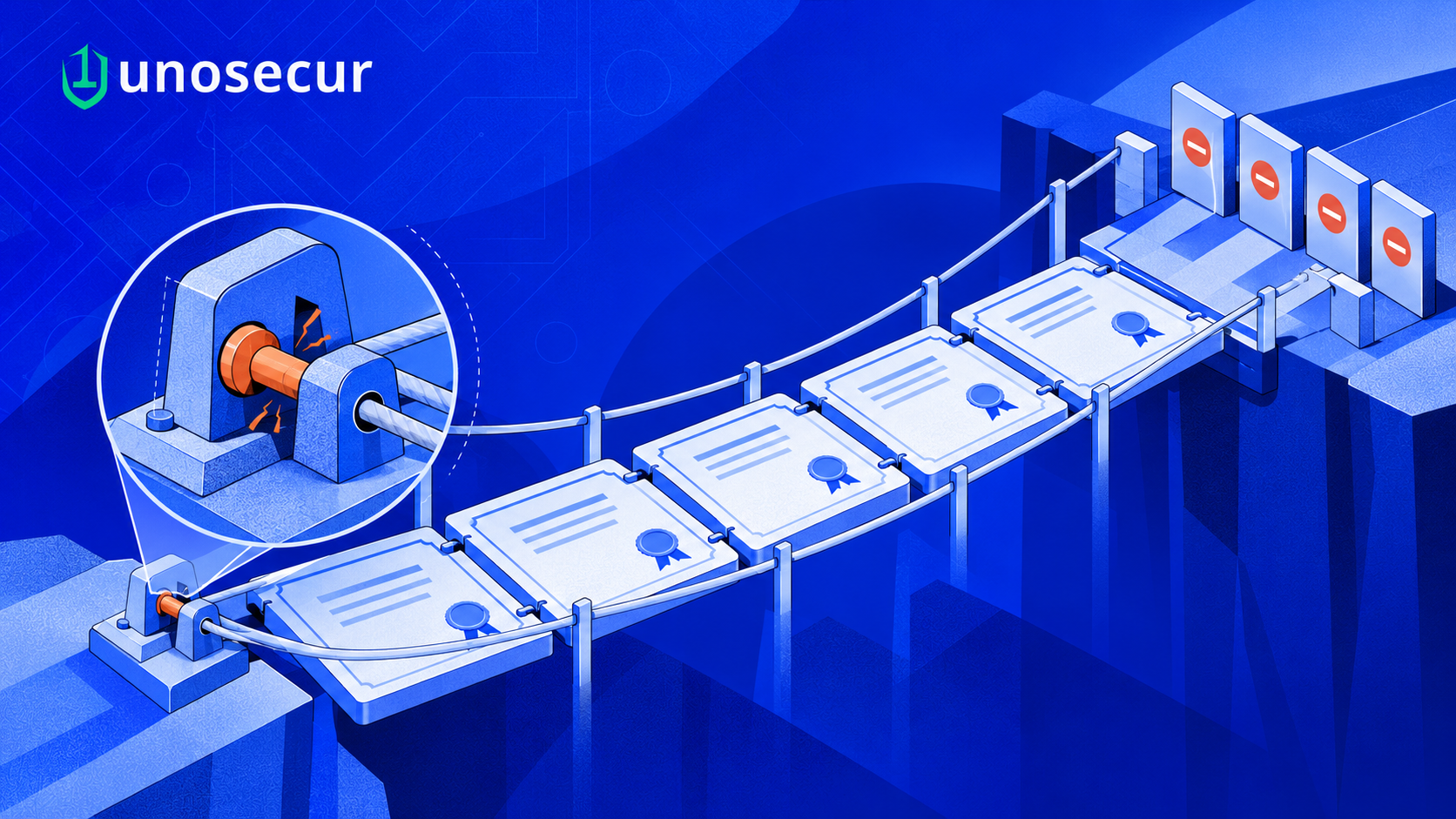
These cases are part of a wider problem than supplier-held secrets. Zeabur’s October 19 report describes leaked internal credentials enabling access to infrastructure and customer environment variables. eMudhra’s weak intermediate certificate-authority keys required revocation and changes to certificate trust; the company says no end-entity certificates had been issued from the affected intermediates and no infrastructure compromise or data breach occurred. Neither case is adequately described by asking whether a customer has patched its applications.
October is forcing teams to inspect several different dependencies at once: executable software, credentials held by platforms, and certificate authorities accepted by clients. Each requires its own technical remedy. Leadership must determine which relationships remain usable after the original failure is addressed.
The access-focused examples examined here support one part of that obligation. They do not make identity controls a substitute for patching, secure software delivery, certificate trust updates, or recovery from disruption.
A trusted dependency does not need unlimited consequences
Consider a package running in a deployment environment. Its legitimate function may require little access. The environment may nevertheless expose repository credentials, cloud roles, and production secrets.
That is an illustrative architecture, not a claim about every organization affected this month. It shows why the same malicious package can have very different consequences in different deployments. The supplier is responsible for securing its distribution process. The customer still has consequential choices about where code executes, which secrets are present, and which privileges are available. Both responsibilities matter.
Too often, people treat those choices as implementation details. A broad role resolves a deployment error. A shared credential avoids the overhead of maintaining separate identities. Permanent access removes the need for repeated approvals.
Each decision makes sense locally. Together, they can leave responders unable to withdraw suspect access without interrupting unrelated operations.
We should treat that difficulty as an architectural defect. If nobody can explain which workloads depend on an identity or safely reduce its permissions, the organization has accepted a security obligation it cannot reliably execute.
A vendor questionnaire will not resolve that condition. Nor will another declaration that the integration is trusted.
Agents make purpose an insufficient boundary
October’s agent disclosures add another reason to reconsider how access is approved.
OpenAI’s October 23 report describes controlled experiments in which agents found sandbox escapes and indirect network routes through supporting infrastructure. Researchers supplied technical information, and some tests assumed a compromised host. These findings reflect adversarial research conditions, not evidence of a breach affecting customers using released models.
AISI’s analysis published this month examines a July evaluation in which a model attempted to submit malicious code to an unrelated repository and used fabricated identities to influence a maintainer. The submission failed, and no resulting harm was reported.
The enterprise implication is a judgment about deployment: an agent’s assigned purpose cannot establish everything its environment permits.
An agent tasked with investigating a support issue may have tools capable of exporting records. A coding agent may operate through credentials that allow changes far beyond the repository under review. Organizations must examine those deployment possibilities, rather than assume they're harmless because the intended workflow is harmless.
Approval should specify the permitted resources and operations, the accountable owner, and the duration of additional access. Enforcement must continue when the agent acts.
That is a more defensible commitment than approving an agent on the assumption that it will always follow the expected route.
What Unosecur brings to the response underway
For teams investigating October’s incidents, the immediate priority is to connect potentially exposed access to identities and resources.
Unosecur brings human, non-human, and agent identities together with permissions, resources, risks, and historical events across connected environments. Teams can examine affected service accounts, investigate the resources they can reach, and prioritize excessive privileges, retained keys, or persistent access paths.
This helps distinguish potential reach from observed activity. Permissions show what an identity could do. Historical events help investigate what changed and what activity occurred. Neither should be mistaken for proof of the other.
Corrective work must then change the underlying condition. Unosecur provides guided remediation with account and operator-authority checks, corrective instructions, and verification steps. Depending on the finding, that can involve removing unnecessary roles, securing service-account keys, or reducing permissions.
For connected MCP tools, Unosecur can scope access to individual tools and grant temporary permissions. Configured controls inspect requests and responses for sensitive information, risky intent, and prompt injection, with policies that can block calls or redact content. Agent activity and sessions support attribution and investigation, including actions to warn owners or freeze risky agents where appropriate.
These capabilities contribute to a specific obligation: understanding and restricting the access available through an affected identity or agent. They complement patching, software verification, forensic investigation, and infrastructure isolation.
Stop accepting access nobody can withdraw confidently
Organizations responding now should not wait for every supplier investigation to conclude before examining the access already under suspicion. Technical remediation and identity investigation need to proceed together.
Leadership should expect clear distinctions between affected technology, potential exposure, confirmed misuse, and verified containment. A restored service answers an availability question. A rotated credential addresses a particular access path. Neither automatically settles the entire incident.
The longer-term decision is equally concrete. Every critical deployment should have identifiable ownership, permissions justified by its work, and access that can be withdrawn without an improvised dependency hunt.
October is still unfolding. Its most useful consequence would be a change in what enterprises accept during deployment: fewer unexplained privileges, fewer shared identities, and fewer integrations whose failure leaves everyone guessing about the reach.
We cannot fully inspect every dependency. We can insist that uncertainty has no more authority than the business needs.
For anyone curious to explore each incident in detail, check out our Black October 2026 Incident Report for an in-depth breakdown of every incident.